15 Turning Points That Make Dumbledore a Complicated Mentor
A brilliant child inside a wounded family — A brilliant child inside a wounded family
Dumbledore's exceptional ability develops alongside family crisis: his sister Ariana is traumatized, his father is imprisoned and his mother withdraws the family from public life.
That combination helps explain both his hunger for a wider intellectual world and his later habit of dividing public duty from painful private information.

Grindelwald offers ambition a vocabulary — Grindelwald offers ambition a vocabulary
As a young man, Dumbledore meets Gellert Grindelwald and finds someone able to match his ideas and intensify them. Their plans elevate gifted wizards above ordinary constraints.
The relationship matters because Dumbledore's later suspicion of personal power is not abstract humility; it is a correction born from having desired domination.

Ariana's death turns theory into consequence — Ariana's death turns theory into consequence
The confrontation involving Albus, Aberforth and Grindelwald ends with Ariana dead and the caster of the fatal spell uncertain. That uncertainty is the moral wound: Dumbledore cannot isolate guilt neatly.
His later caution, avoidance and service all grow from knowing that dazzling ideas did not protect the person most dependent on him.

He redirects ambition into teaching — He redirects ambition into teaching
Dumbledore eventually builds his adult identity at Hogwarts, first as a teacher and later as headmaster. Education channels his brilliance toward developing other people, yet the role also grants broad informal power.
That tension persists: he can encourage curiosity and resistance while still deciding which facts students are ready to hear.

He delays confronting Grindelwald — He delays confronting Grindelwald
Dumbledore ultimately defeats Grindelwald in 1945, but the novels frame the delay as personal as well as tactical.
He fears what the former friend knows and what a renewed confrontation might reveal about Ariana's death. Heroic action arrives only after avoidance has imposed its own cost—a recurring feature of his choices.
Victory leaves him holding exceptional power — Victory leaves him holding exceptional power
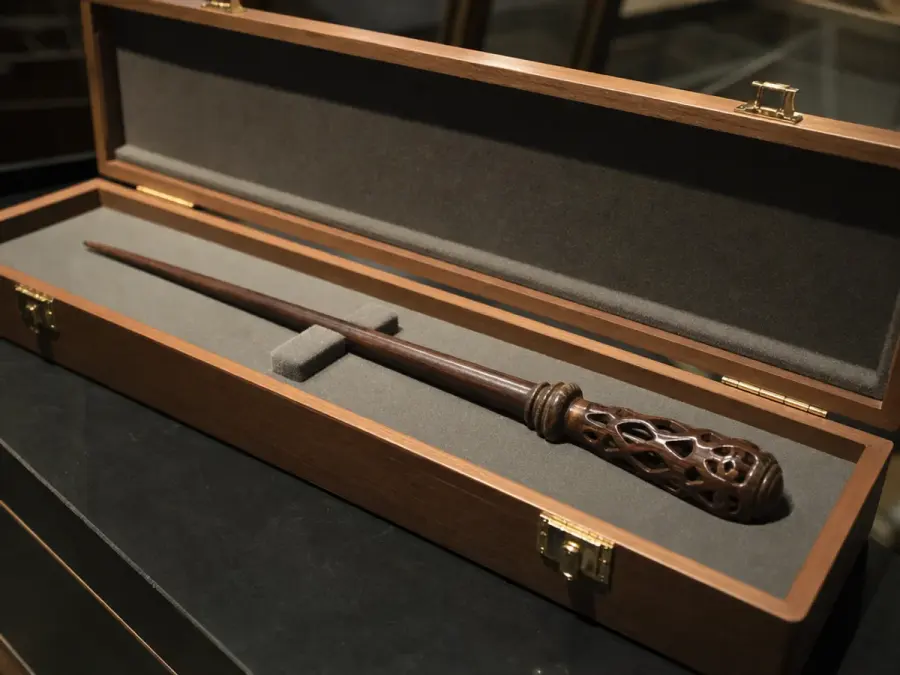
After defeating Grindelwald, Dumbledore becomes master of the extraordinarily powerful Elder Wand. He keeps it, but does not use that possession to seize government.
The choice illustrates disciplined restraint while preserving a contradiction: he distrusts himself with formal office yet accepts custody of an object that concentrates enormous personal power.

He recognizes danger in Tom Riddle — He recognizes danger in Tom Riddle
Dumbledore is among the few adults who sees that young Tom Riddle's charm and talent coexist with cruelty and a desire for control. Yet recognition does not produce a simple prevention story.
Institutions can monitor, challenge and teach, but the series refuses the comforting idea that one perceptive educator can fully redirect another person's choices.

Headmaster, network builder and political counterweight — Headmaster, network builder and political counterweight
Dumbledore's authority extends beyond school through the Order of the Phoenix and his standing in wizarding institutions. He can mobilize resistance when official bodies deny danger.
The same network-driven leadership depends heavily on personal trust, however, which means information flows through him and can become distorted when he withholds or disappears.

Leaving Harry with the Dursleys is protective and harmful — Leaving Harry with the Dursleys is protective and harmful
Dumbledore places the orphaned Harry with his mother's relatives to extend protective magic through family blood. That strategic protection coexists with years of neglect and mistreatment in the household.
The decision reveals his recurring willingness to accept immediate personal harm as the price of a larger defensive plan—often without meaningful consent.

The mentor teaches through arranged choices — The mentor teaches through arranged choices
Rather than hand Harry a complete explanation, Dumbledore often creates circumstances in which the student must notice, decide or act.
This can build judgment and courage, but it also obscures how much the field has been arranged. The teaching method is powerful precisely because it sits between education and manipulation.

His distance in Harry's fifth year backfires — His distance in Harry's fifth year backfires
When Dumbledore avoids Harry to reduce a mental connection that Voldemort might exploit, Harry experiences the silence as rejection.
The plan protects information but deprives a traumatized adolescent of context and support. It is one of the clearest examples of Dumbledore understanding an enemy's mechanism better than a student's emotional need.

The Horcrux lessons are his most transparent mentorship — The Horcrux lessons are his most transparent mentorship
During Harry's sixth year, Dumbledore shares memories that let them build a theory of Voldemort's divided soul.
He still selects the archive and controls its pace, but Harry is finally invited into the analytical work. Their sessions show the mentor at his best: evidence, uncertainty and interpretation become a joint process.

The ring curse imposes a deadline — The ring curse imposes a deadline
Dumbledore's temptation to use a family-associated object leaves him mortally cursed. Even after decades of discipline, grief can bypass his judgment.
Once the damage is contained only temporarily, he treats his remaining time as a strategic resource. The plan that follows is therefore both atonement and another act of control.

His death is planned, but not consequence-free — His death is planned, but not consequence-free
Dumbledore and Snape arrange the headmaster's death to limit the curse's outcome, protect Draco from becoming a killer and preserve Snape's position.
The strategy is intricate, yet it makes Snape carry an isolating burden and leaves allies interpreting apparent betrayal. A controlled ending creates uncontrolled grief and suspicion.

The final legacy is fallibility, not sainthood — The final legacy is fallibility, not sainthood
After Dumbledore's death, Harry discovers the youthful ambition, family secrecy and compromises hidden by the serene public image.
That knowledge does not erase the good he accomplished; it makes admiration more mature. The series ultimately treats wisdom as the ability to confront one's capacity for harm, not freedom from it.
Featured galleries







































































































































































































































































































































































































































































