Best Songs Featuring Missy Elliott, Ranked
1. Get Ur Freak On — Missy Elliott — 1. Get Ur Freak On — Missy Elliott
The track's famous immediacy comes from subtraction: a sharply defined rhythmic figure, open space, and Missy's voice switching between command, percussion, and comic timing.
It won the 2002 Grammy for rap solo performance. More important for this ranking, it still sounds structurally daring rather than merely attached to its era.
2. Work It — Missy Elliott — 2. Work It — Missy Elliott
Timbaland's production makes negative space feel spring-loaded while Missy moves through playful voices and rhythmic angles with total control. The record rewards close listening without losing dance-floor force.
Its Grammy win for female rap solo performance recognizes the vocal achievement; its deeper distinction is how production tricks remain integrated with character.
3. The Rain (Supa Dupa Fly) — Missy Elliott — 3. The Rain (Supa Dupa Fly) — Missy Elliott
This debut-era statement establishes a complete world: elastic low end, conversational authority, and a hook whose coolness comes from restraint. Missy sounds unhurried even as the production bends around her.
The song received a Grammy nomination, but its higher value is aesthetic clarity—the arrival of an artist whose humor and experimentation were already inseparable.
4. Lose Control — Missy Elliott featuring Ciara and Fat Man Scoop — 4. Lose Control — Missy Elliott featuring Ciara and Fat Man Scoop
A high-velocity collaboration succeeds because each voice has a defined job: Missy steers, Ciara supplies sleek melodic motion, and Fat Man Scoop raises the room's pressure.
The electro-derived pulse never relaxes. The recording earned Grammy recognition, and its video won the 2006 award, but the audio alone explains its endurance.
5. Gossip Folks — Missy Elliott featuring Ludacris — 5. Gossip Folks — Missy Elliott featuring Ludacris
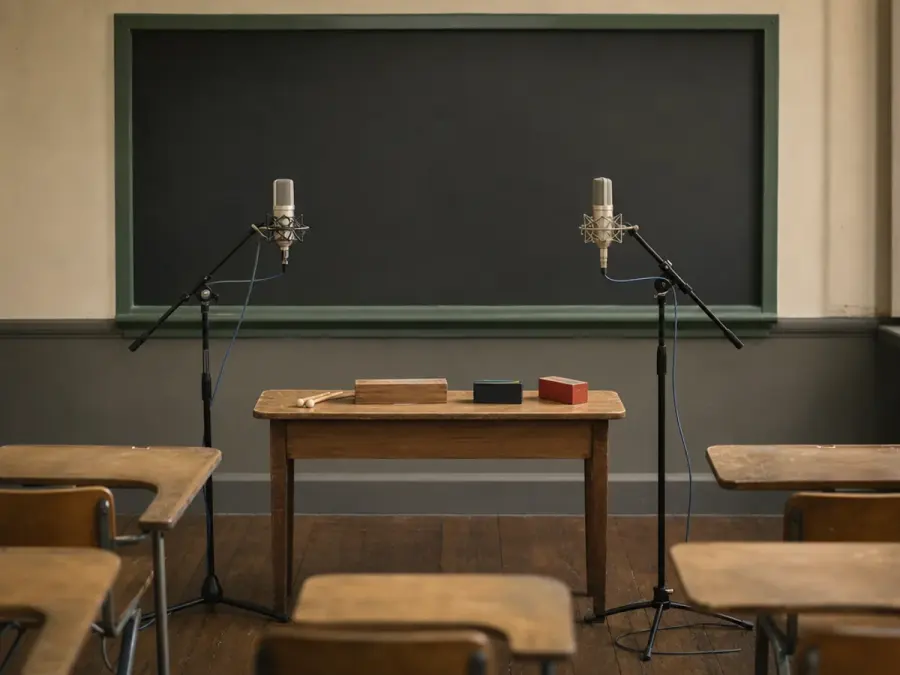
A schoolyard-like sample texture, marching momentum, and dense vocal choreography turn rumor into kinetic theater. Ludacris matches the exaggerated scale without displacing the lead voice.
The collaboration received a Grammy nomination for rap duo or group performance. It ranks high because the concept, beat, and two performances all point in the same direction.
6. 1, 2 Step — Ciara featuring Missy Elliott — 6. 1, 2 Step — Ciara featuring Missy Elliott
Ciara's cool precision and Missy's elastic guest energy meet over a sparse electro groove that leaves every movement audible. The feature is concise but architecturally important: it changes the song's texture and pushes its playfulness outward.
The collaboration received a Grammy nomination, demonstrating how a guest appearance can complete rather than interrupt a record.
7. Sock It 2 Me — Missy Elliott featuring Da Brat — 7. Sock It 2 Me — Missy Elliott featuring Da Brat
The track balances a lush soul-derived foundation with crisp drums and two highly distinct rap voices. Missy's melodic ease and Da Brat's tighter attack create conversation through contrast.
It is a reminder that the early catalog's futurism did not reject musical history; it reorganized familiar warmth into something aerodynamically new.
8. Hot Boyz — Missy Elliott featuring Nas, Eve and Q-Tip (remix) — 8. Hot Boyz — Missy Elliott featuring Nas, Eve and Q-Tip (remix)
The remix expands an already atmospheric track into a relay of contrasting cadences. Missy remains the center by controlling the mood: low-lit, spacious, and confident rather than crowded.
Its large guest list could have become a compilation exercise, but sequencing and tonal consistency make it feel like one designed room with several entrances.
9. One Minute Man — Missy Elliott featuring Ludacris — 9. One Minute Man — Missy Elliott featuring Ludacris
The track uses ticking tension, abrupt rhythmic shapes, and contrasting vocal personas to turn a compact premise into a full production design.
Ludacris's guest performance adds another comic register, but Missy's control of pace remains decisive. Its Grammy nomination supports the record's contemporary recognition without replacing an analysis of why the arrangement works.
10. Pass That Dutch — Missy Elliott — 10. Pass That Dutch — Missy Elliott
Percussion arrives in blocks, breaks apart, and reforms while Missy keeps redirecting the listener's attention. The performance is less about a single climactic hook than maintaining motion through vocal color and command.
It ranks as one of her most effective pure energy records: strange enough to reward headphones, direct enough to move a crowd.
11. WTF (Where They From) — Missy Elliott featuring Pharrell Williams — 11. WTF (Where They From) — Missy Elliott featuring Pharrell Williams
After a long gap between major solo singles, this return refused nostalgia. The beat is clipped and skeletal, and Missy's phrasing remains agile enough to make every pocket feel newly discovered.
Pharrell's presence supports the odd geometry rather than smoothing it. The track proves that her futurism is an approach, not a period sound.
12. Let It Go — Keyshia Cole featuring Missy Elliott and Lil' Kim — 12. Let It Go — Keyshia Cole featuring Missy Elliott and Lil' Kim
Keyshia Cole's strong melodic center is framed by two guest rappers with different kinds of authority. Missy's contribution helps establish the record's celebratory release without crowding the vocal.
The collaboration received a Grammy nomination for melodic rap performance, and its durable appeal lies in the balance between R&B songcraft and sharply placed features.
13. Car Wash — Christina Aguilera featuring Missy Elliott — 13. Car Wash — Christina Aguilera featuring Missy Elliott
This soundtrack collaboration gives Aguilera the melodic showcase while Missy adds rhythmic wit and connective energy. The production's retro reference point is obvious, but the two performers prevent it from becoming museum polish.
It ranks below her most original sonic worlds, yet remains an instructive example of adapting her voice to a family-film context.
14. Without Me — Fantasia featuring Kelly Rowland and Missy Elliott — 14. Without Me — Fantasia featuring Kelly Rowland and Missy Elliott
Fantasia's vocal intensity leads, Kelly Rowland brings a contrasting smoothness, and Missy enters as a concise change of angle. The song's writers, including Missy, received a Grammy nomination for R&B song.
Its strength is allocation: three recognizable performers occupy separate lanes while preserving the emotional through-line of the lead performance.
15. Tempo — Lizzo featuring Missy Elliott — 15. Tempo — Lizzo featuring Missy Elliott
The collaboration joins two performers who understand humor as musical force rather than a break from technique. A thick, deliberate groove gives their rhythmic phrasing room, and Missy's feature feels like a genuine meeting of sensibilities.
It closes the list because the surrounding song is more conventional than her highest-ranked productions, not because the chemistry is slight.
Featured galleries







































































































































































































































































































































































































































































