15 Country Songs That Open a Door Into the Genre's History
Jimmie Rodgers — “Blue Yodel (T for Texas)” (1928) — Jimmie Rodgers — “Blue Yodel (T for Texas)” (1928)
Rodgers's breakout recording shows early commercial country already crossing boundaries: railroad-worker imagery, blues structure and a signature yodel meet the recording industry's new appetite for regional voices.
It is a useful beginning because it complicates any myth that country emerged as one pure, isolated tradition.
The Carter Family — “Can the Circle Be Unbroken (By and By)” (1935) — The Carter Family — “Can the Circle Be Unbroken (By and By)” (1935)
The Carter Family's recording joins an older hymn tradition to close family harmony and Maybelle Carter's foundational guitar approach.
Its enduring strength lies in a communal musical shape that later singers could reinterpret. Hearing it historically means noticing both preservation and transformation, not treating authorship as a simple origin story.

Ernest Tubb — “Walking the Floor Over You” (1941) — Ernest Tubb — “Walking the Floor Over You” (1941)
Tubb's hit helped define honky-tonk through a direct vocal, dance-floor pulse and prominent electric guitar. The production sounds built for a room where heartbreak has to carry through conversation.
Its influence is therefore social as well as musical: this is country shaped for amplified nightlife and working audiences.
Hank Williams — “Your Cheatin' Heart” (1953) — Hank Williams — “Your Cheatin' Heart” (1953)
Released after Williams's death, this recording condenses accusation and vulnerability into an exceptionally clear melodic statement.
The arrangement leaves space around the vocal, letting emotional contradiction do the work. Its later standard status shows how country songwriting can be conversational on the surface while structurally precise underneath.

Johnny Cash — “I Walk the Line” (1956) — Johnny Cash — “I Walk the Line” (1956)
Cash's breakthrough uses a spare rhythmic engine and striking key changes to turn a pledge of steadiness into music that is never static.
The tension between control and motion became central to his early sound. It also demonstrates how a lean arrangement can make formal invention feel immediate rather than academic.
Patsy Cline — “Crazy” (1961) — Patsy Cline — “Crazy” (1961)
Cline's controlled phrasing and the polished Nashville Sound arrangement turn emotional uncertainty into something poised but never cold.
Willie Nelson's unusual melodic writing gives her room to stretch time inside a line. The recording is a strong lesson in how vocalist, song and production can retain distinct personalities while serving one mood.

Jeannie C. Riley — “Harper Valley P.T.A.” (1968) — Jeannie C. Riley — “Harper Valley P.T.A.” (1968)
Riley's recording brings a self-contained narrative, social judgment and a decisive protagonist into a brisk pop-country frame. Written by Tom T.
Hall, it became a major crossover without sanding away its small-town specificity. The song matters as proof that a sharply drawn character can carry both satire and commercial immediacy.
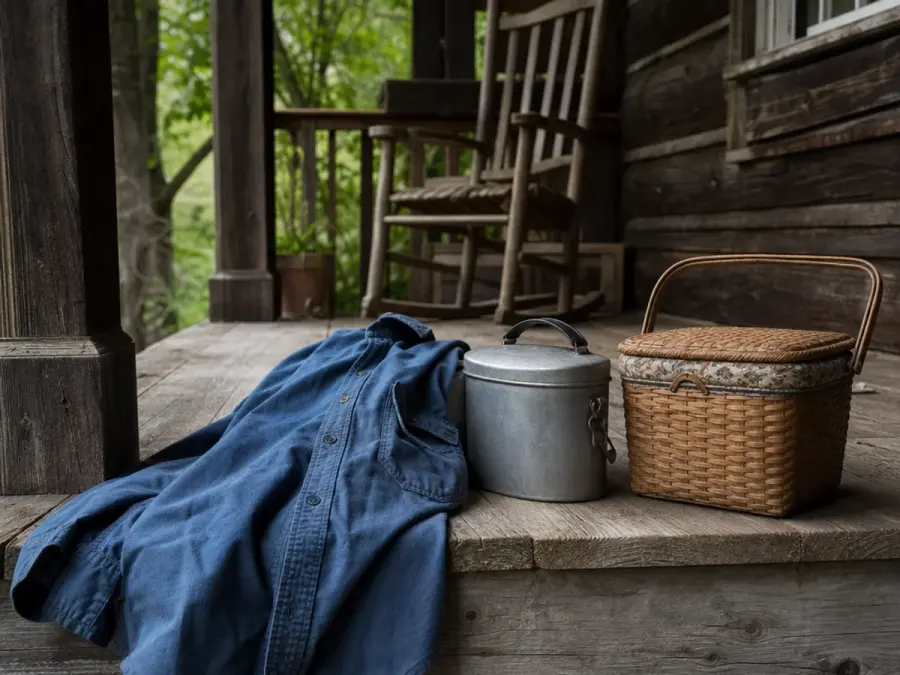
Loretta Lynn — “Coal Miner's Daughter” (1970) — Loretta Lynn — “Coal Miner's Daughter” (1970)
Lynn turns autobiographical detail into a larger account of family labor, scarcity, pride and migration without losing the specificity of place.
Her plainspoken authority changes who controls the story: the singer is neither mascot nor observer. The song became an enduring model for country artists writing their own working-life histories.

Dolly Parton — “Jolene” (1973) — Dolly Parton — “Jolene” (1973)
A repeating guitar figure and a direct address give “Jolene” extraordinary momentum without requiring a dense arrangement.
Parton's narrator speaks from vulnerability rather than revenge, which makes the emotional triangle more complex than a rivalry slogan. The recording's adaptability across genres follows from that rhythmic and psychological clarity.
Kenny Rogers — “The Gambler” (1978) — Kenny Rogers — “The Gambler” (1978)
Don Schlitz's story-song gives Rogers the role of listener as much as narrator, using a nighttime encounter to frame practical philosophy.
The chorus became culturally portable, but the recording's craft is in how patiently it earns that summary. It is a master class in sequencing scene, voice and memorable generalization.

George Jones — “He Stopped Loving Her Today” (1980) — George Jones — “He Stopped Loving Her Today” (1980)
Jones's performance makes a potentially melodramatic story feel painfully observed, while Billy Sherrill's production widens the emotional scale without rushing the reveal.
The song helped renew Jones's career and became a genre benchmark. Its lesson is that interpretive restraint can make an extreme narrative more, not less, believable.

Randy Travis — “Forever and Ever, Amen” (1987) — Randy Travis — “Forever and Ever, Amen” (1987)
Travis's warm baritone and the song's plain language helped the late-1980s neotraditional movement sound accessible rather than archival.
The arrangement foregrounds voice, guitar and a gently comic sense of permanence. Its craft lies in making commitment feel lived-in, with humor preventing sincerity from hardening into ceremony.

Brooks & Dunn — “Neon Moon” (1992) — Brooks & Dunn — “Neon Moon” (1992)
The duo's ballad places loneliness inside a public nightlife space, using the glow and slow rhythm of the room as emotional architecture.
Ronnie Dunn's vocal carries the scene without crowding it. The song shows how early-1990s mainstream country could be highly polished while preserving honky-tonk's essential solitude.

Martina McBride — “Independence Day” (1994) — Martina McBride — “Independence Day” (1994)
Gretchen Peters's composition and McBride's performance use a public celebration as counterpoint to domestic violence and its devastating consequences.
The title can be misunderstood when separated from the verses, which is why responsible criticism must retain the narrative frame. It expanded what a radio-country single could confront directly.

Kacey Musgraves — “Follow Your Arrow” (2013) — Kacey Musgraves — “Follow Your Arrow” (2013)
Musgraves, Brandy Clark and Shane McAnally frame contradictory social expectations with conversational wit, then argue for self-directed living.
The production keeps the message light on its feet rather than turning it into a lecture. Its place here marks a modern country debate over belonging, tradition and who gets to narrate ordinary life.
Featured galleries







































































































































































































































































































































































































































































