14 Drake Rap Songs, Ranked for Bars, Structure, and Performance
Why This List Excludes the Biggest Pop Hits — Why This List Excludes the Biggest Pop Hits
A rap ranking should not become another popularity list. “One Dance,” “Hotline Bling,” and other melodic records reveal important range, but they answer a different question.
These fourteen selections foreground verses, flows, structure, and production choices that test Drake primarily as a rapper.
14. Churchill Downs, with Jack Harlow — 14. Churchill Downs, with Jack Harlow
Drake's extended guest verse changes the center of gravity on “Churchill Downs,” showing how a feature can become a self-contained performance.
It opens our ranking because the song belongs to another lead artist, despite the verse's detail and controlled pace.
13. Omertà — 13. Omertà
A dark, spare instrumental gives Drake room for a single-minded rap performance without a pop refrain.
Thirteenth rewards focus and atmosphere, while the track's relatively narrow emotional range keeps it below records that change flow, scene, or argument more substantially.
12. Diplomatic Immunity — 12. Diplomatic Immunity
The title frames a long status report delivered with measured control over a subdued sample. It ranks twelfth because the performance rewards close listening more than hook-driven replay.
The gallery treats public writing as craft and does not adjudicate personal claims made in a song.
11. Lord Knows, featuring Rick Ross — 11. Lord Knows, featuring Rick Ross
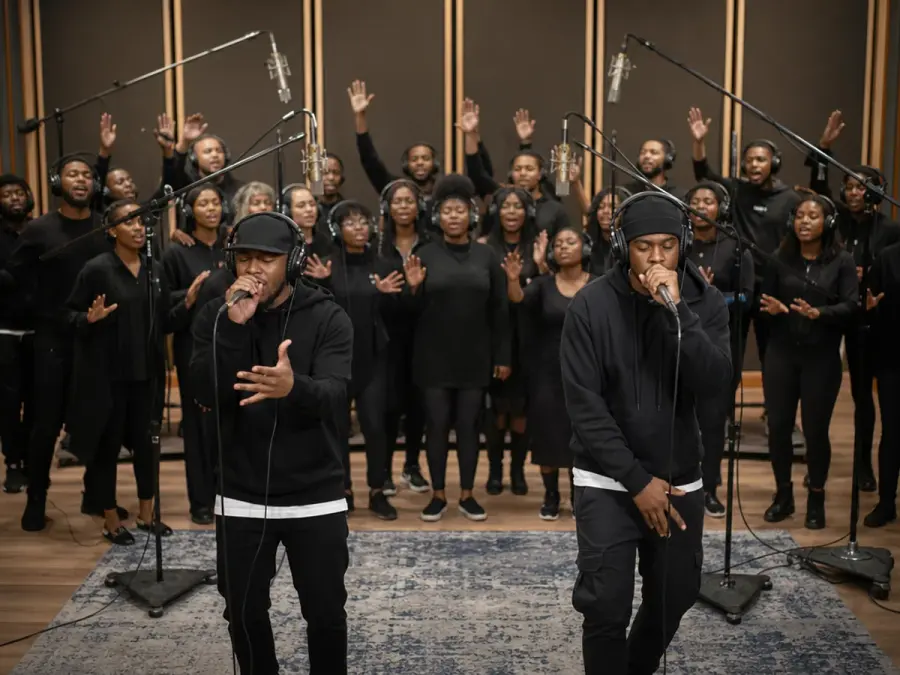
Large gospel-sample production asks both rappers to project over a dense, triumphant arrangement. Eleventh recognizes breath control, scale, and guest chemistry.
Credits matter, so Rick Ross is named; the visual does not recreate religious performance or the sampled source.
10. Energy — 10. Energy
A blunt, repetitive beat gives “Energy” a rigid frame that Drake fills with changing emphasis and clipped phrasing.
Grammy's archive lists it among his rap nominations. It enters the top ten for performance identity, though the writing is less expansive than entries ahead.
9. 6PM in New York — 9. 6PM in New York
The timestamp series invites a concentrated bars-first mode, and this installment uses a steady beat to foreground dense lines and competitive focus.
Ninth rewards sustained technical performance. Place names identify the song; the visual avoids city trademarks or a false documentary setting.
8. Pound Cake / Paris Morton Music 2, featuring Jay-Z — 8. Pound Cake / Paris Morton Music 2, featuring Jay-Z
Two linked sections create a broader structural test than a standard single-beat rap song. Eighth rewards transition, guest contrast, and the reflective second movement.
We discuss arrangement without reproducing sampled vocals or any lines from either section.

7. 0 to 100 / The Catch Up — 7. 0 to 100 / The Catch Up
A forceful first section gives way to a more spacious second movement, letting intensity and reflection share one track.
Seventh recognizes that architectural contrast. The familiar phrase is the released title; our body does not repeat its best-known lyric or chart history.
6. Do Not Disturb — 6. Do Not Disturb
A restrained sample and closing-track perspective give “Do Not Disturb” the feel of an end-of-season report.
Sixth rewards clarity, sequencing, and sustained writing without a loud hook. It works best when heard as both an individual performance and an album conclusion.
5. Middle of the Ocean — 5. Middle of the Ocean
An extended, luxurious sample bed supports a calm but densely detailed performance with few concessions to pop structure.
Fifth reflects pure rap focus and patience. The title becomes an abstract sense of isolation rather than a literal yacht or lifestyle advertisement.
4. Lemon Pepper Freestyle, with Rick Ross — 4. Lemon Pepper Freestyle, with Rick Ross
A soulful loop and long verse create room for memory, detail, and changes in cadence without a conventional chorus.
Fourth rewards stamina and conversational control. Rick Ross receives collaboration credit, while the ranking focuses on Drake's extended second-half performance.
3. First Person Shooter, with J. Cole — 3. First Person Shooter, with J. Cole
Two elite rappers use shifting production as both collaboration and competition. Third rewards guest chemistry, beat adaptation, and performance scale.
We avoid turning the slide into a feud scoreboard; the public recording provides enough material for a craft-focused comparison.
2. Tuscan Leather — 2. Tuscan Leather
Three production movements and no traditional chorus make the Nothing Was the Same opener an unusually ambitious technical statement.
It ranks second because Drake repeatedly resets cadence and tone while preserving momentum. The title receives no fashion-brand visual treatment.
1. 5AM in Toronto — 1. 5AM in Toronto
Our top rap performance strips away crossover expectations and centers an urgent, sustained run over a hard-edged beat.
Cadence shifts, competitive focus, and local identity make the track a compact demonstration of Drake as a rapper. First place is editorial, not a chart claim.
Featured galleries







































































































































































































































































































































































































































































