Family Board Games for 12 Different Kinds of Game Night
Ticket to Ride — Route Building With a Clear Goal — Ticket to Ride — Route Building With a Clear Goal
Days of Wonder lists the North America base game for two to five players, ages eight and up, in about 30 to 60 minutes. Players collect matching train cards and claim routes between cities to complete tickets.
That visible map and repeated turn pattern make it a friendly choice when a group wants strategy without many different action types.

Sushi Go Party! — Quick Choices for a Bigger Table — Sushi Go Party! — Quick Choices for a Bigger Table
Gamewright lists Sushi Go Party! for two to eight players, ages eight and up, with a 30-minute play time. Each turn asks players to choose a card and pass the rest, while the selected menu changes what combinations matter.
The simultaneous rhythm keeps a larger table involved and gives returning players room to try a different menu.
Just One — Cooperative Clues That Reward Restraint — Just One — Cooperative Clues That Reward Restraint
Repos Production lists the current Just One edition for three to seven players, ages eight and up, in about 20 minutes. Everyone writes a one-word clue for the guesser, but matching clues are removed.
The rule turns ordinary word association into a cooperative exercise in anticipating how other people think without requiring trivia knowledge.
Kingdomino — A Compact Spatial Puzzle — Kingdomino — A Compact Spatial Puzzle
Blue Orange lists Kingdomino for two to four players, ages eight and up, with a 15-minute play time. Players add domino-like landscape tiles to a five-by-five kingdom and score connected terrain with crowns.
The small footprint and short duration suit families that want a complete strategy game without committing the whole evening.
Forbidden Island — Win or Lose Together — Forbidden Island — Win or Lose Together
Gamewright lists Forbidden Island for two to four players, ages ten and up, in about 30 minutes. The publisher describes a cooperative mission to collect four treasures and escape while island tiles sink.
Because the group shares one outcome, the game works well for families that prefer discussing priorities over competing for a personal score.

Codenames — Team Wordplay for Confident Communicators — Codenames — Team Wordplay for Confident Communicators
Czech Games Edition lists its current Codenames edition for four to eight or more players, ages ten and up, with a 15-minute length. Rival clue-givers connect words for their teams while avoiding a losing choice.
It is strongest when players enjoy interpreting language and can accept that a clever clue may not land the way its author expected.

Qwirkle — Pattern Building Across Generations — Qwirkle — Pattern Building Across Generations
MindWare lists Qwirkle for two to four players, ages six and up; its official rules give a typical 30-to-60-minute range. Players extend rows and columns by matching color or shape without duplicates.
The information stays visible on the table, so younger and older players can reason from the same shared pattern rather than hidden text.
Blokus — One Placement Rule, Constant Interaction — Blokus — One Placement Rule, Constant Interaction
Mattel lists the current Blokus family game for two to four players, ages seven and up.
Each piece of a player's color must touch another of that color only at a corner, and the goal is to fit as many pieces as possible. The rule is brief, but every placement changes the space available to everyone else.
Carcassonne — Build One Landscape, Compete Within It — Carcassonne — Build One Landscape, Compete Within It
Z-Man Games lists Carcassonne for two to five players, ages seven and up, in 30 to 45 minutes. Players place landscape tiles to extend roads, cities, monasteries, and fields, then commit followers to features for scoring.
Families share the pleasure of watching one map grow even while each player pursues a different opportunity.
Azul — Beautiful Drafting With Tight Consequences — Azul — Beautiful Drafting With Tight Consequences
Next Move Games lists Azul for two to four players, ages eight and up, in 30 to 45 minutes. Players draft tiles and arrange them on personal boards, earning bonuses for completed patterns while unused tiles can cost points.
It fits families ready for a quiet abstract game in which taking the appealing option can also help or hinder a neighbor.
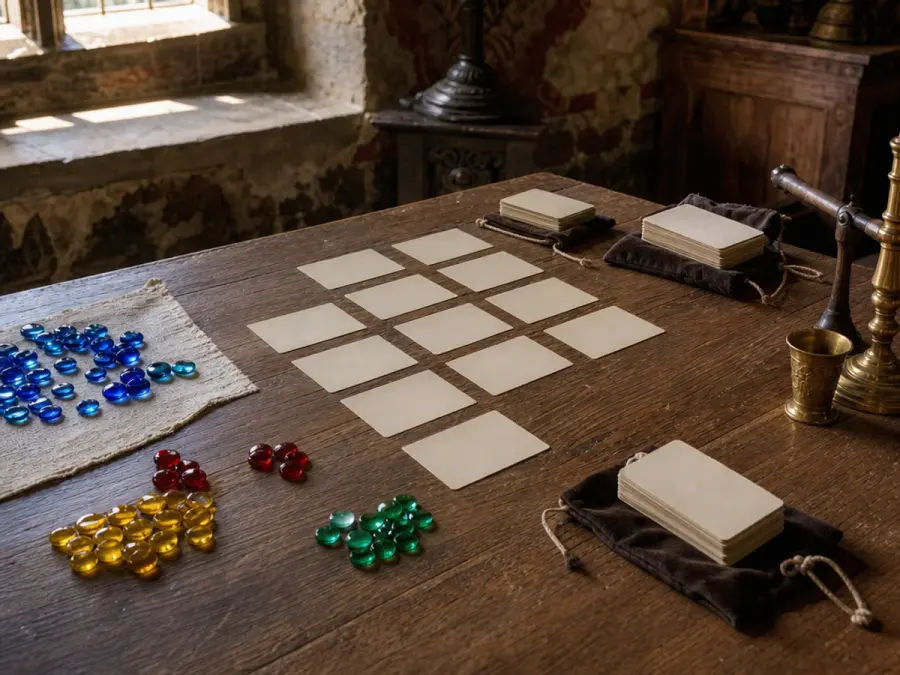
Splendor — A Short Engine-Building Introduction — Splendor — A Short Engine-Building Introduction
Asmodee's official store lists the current Splendor edition for two to four players, ages ten and up, with a 30-minute average. Players collect gem resources, acquire developments, and build discounts toward higher-value choices.
Its repeated collect-or-buy rhythm introduces engine building without a campaign, long setup, or private rules exception for each player.

Wingspan — A Longer Nature-Themed Engine Builder — Wingspan — A Longer Nature-Themed Engine Builder
Stonemaier lists the current English-language Wingspan base game with the Swift-Start Pack for one to five players. Its official product page currently conflicts on duration: the fact panel says 40 to 70 minutes, while the descriptive copy says 40 to 90 minutes.
Families should confirm the estimate on their box and rulebook. Players add birds to habitat rows that strengthen later actions. This is the most involved choice here, suited to a family willing to learn icon-driven cards and let each personal board develop gradually.
Featured galleries







































































































































































































































































































































































































































































