Freeing the Forest Giant: The Incredible Rescue of Colorado's Tire-Necked Elk
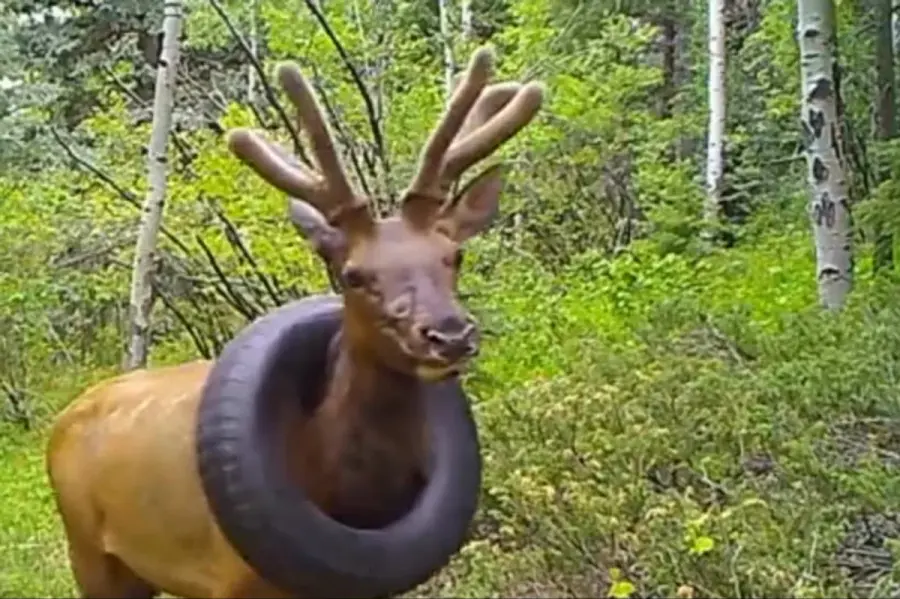
A Heavy Burden — A Heavy Burden
For over two years, residents and wildlife officials in Colorado tracked a bull elk with a bizarre and painful accessory.
A heavy rubber tire was firmly wedged around its neck, sparking deep concern for its survival. This unusual sight quickly became a priority for local conservationists determined to help.
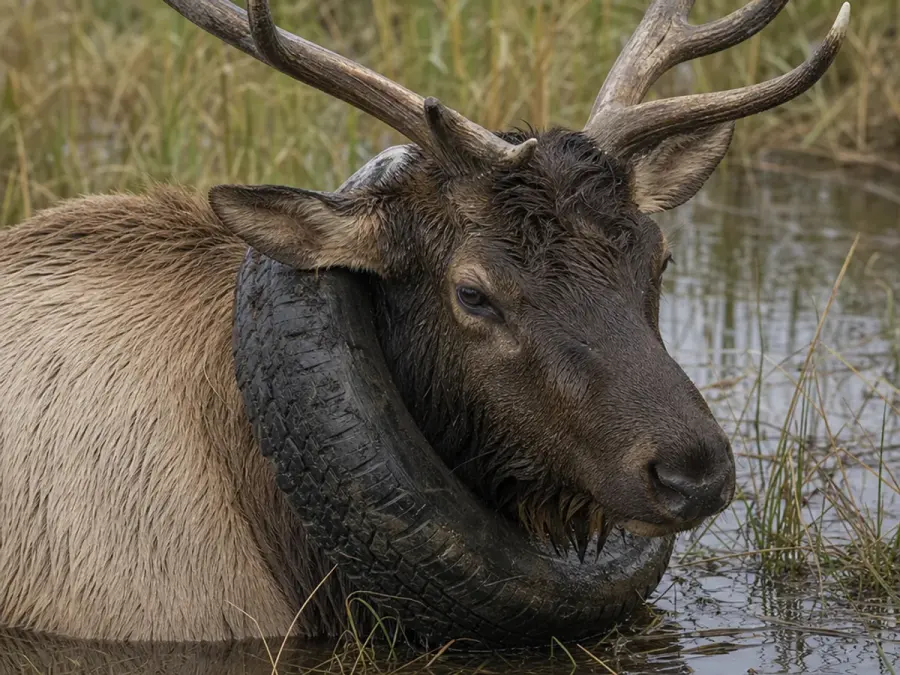
Years of Struggle — Years of Struggle
Living in the wild is difficult enough, but carrying an extra 35 pounds of rubber and steel made every day a battle for this elk.
As the bull grew larger, the tire became increasingly tight and dangerous. Observers feared it would eventually restrict the animal's breathing or ability to eat.
Elusive and Wild — Elusive and Wild
Despite numerous sightings, tracking the elk proved to be an immense challenge for wildlife officers.
The wild animal frequently traveled through rugged, remote terrain that was difficult for humans to access. Every time rescuers got close, the herd would quickly scatter into the dense wilderness.
A Community on Watch — A Community on Watch
Local residents played a crucial role by reporting sightings and sharing GPS coordinates with wildlife agencies.
This collaborative effort kept the rescue mission alive even when hope began to fade. Everyone wanted to see the majestic creature freed from its human-made collar.
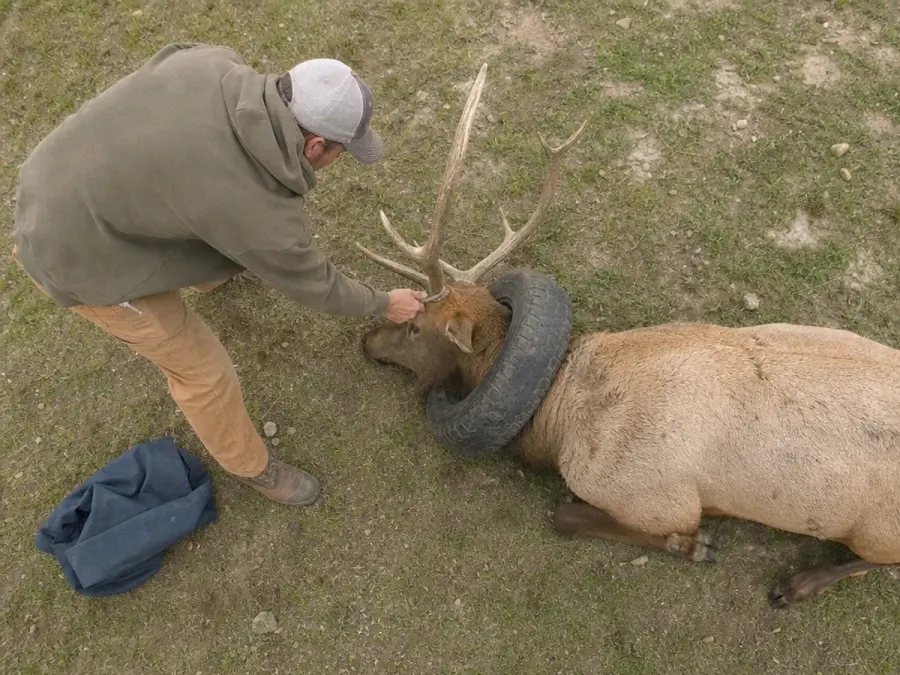
The Rescue Plan — The Rescue Plan
Wildlife officers formulated a careful plan that required tranquilizing the massive animal safely.
Because of the elk's size and the potential danger of the tranquilizer in steep terrain, the team had to wait for the perfect moment. Precision and patience were key to ensuring the safety of both the elk and the rescuers.
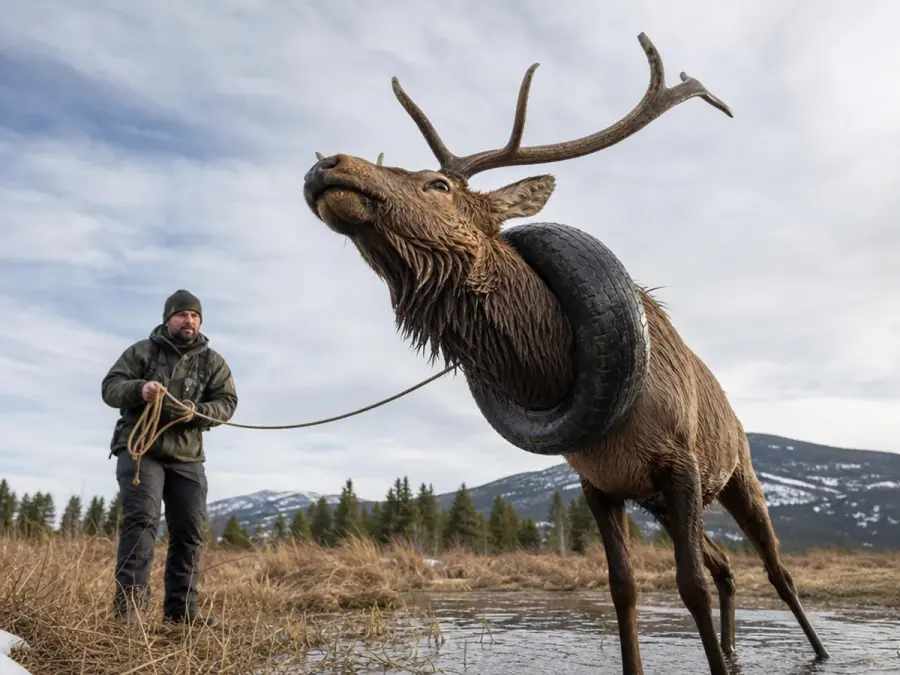
The Perfect Opportunity — The Perfect Opportunity
The breakthrough finally came when officers spotted the elk in a relatively flat and accessible area.
Acting quickly, they successfully deployed a tranquilizer dart to put the giant to sleep. Once the bull was safely unconscious, the team rushed in to begin the delicate operation.
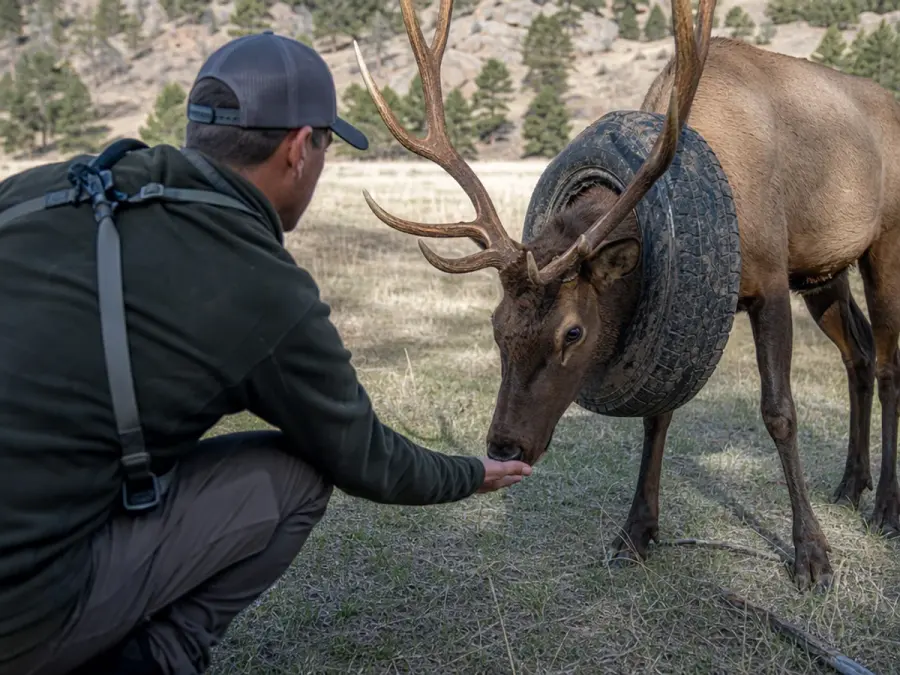
A Difficult Dilemma — A Difficult Dilemma
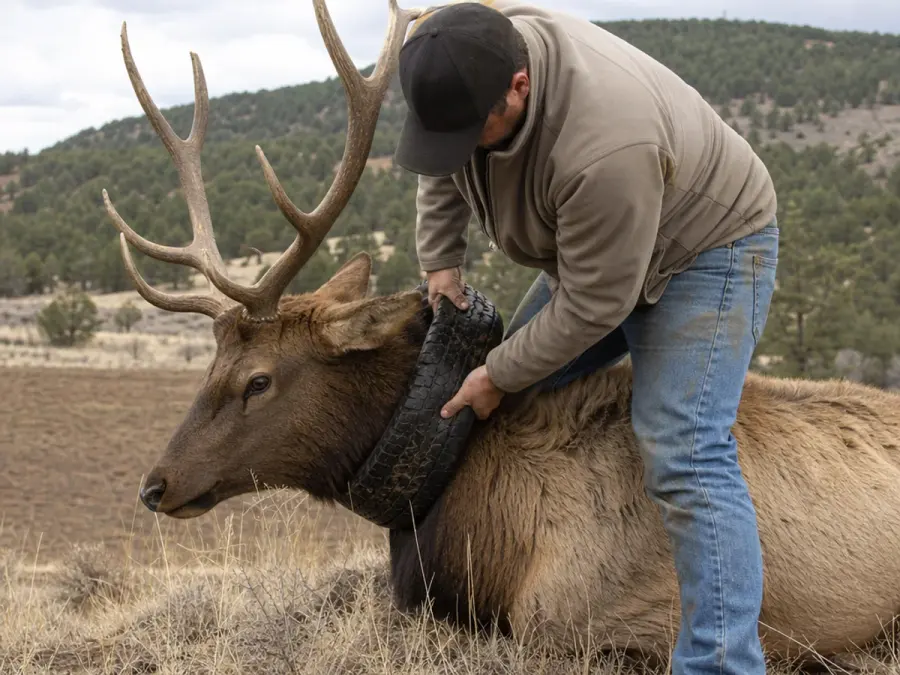
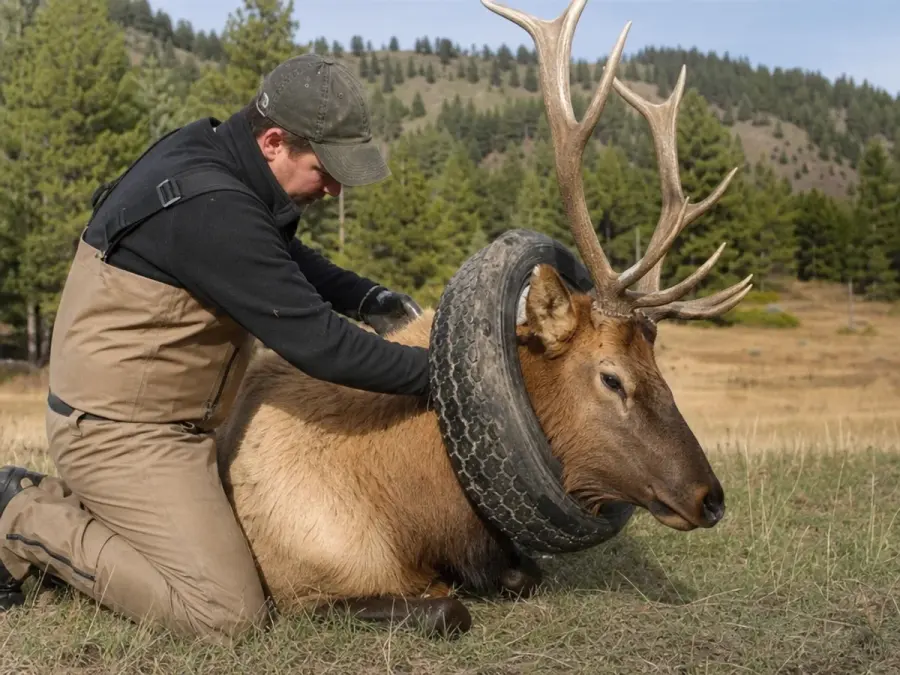
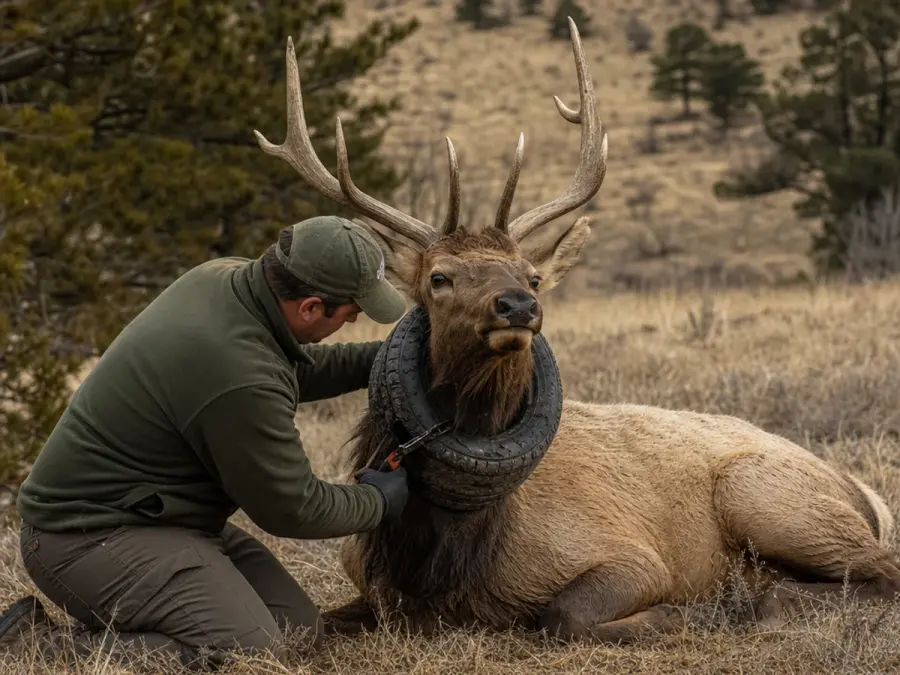
Once they reached the elk, rescuers faced a difficult decision on how to remove the tire.
The steel-belted rubber was incredibly tough to cut through with their portable tools, and time was running out. They had to act fast before the tranquilizer wore off and the elk woke up.
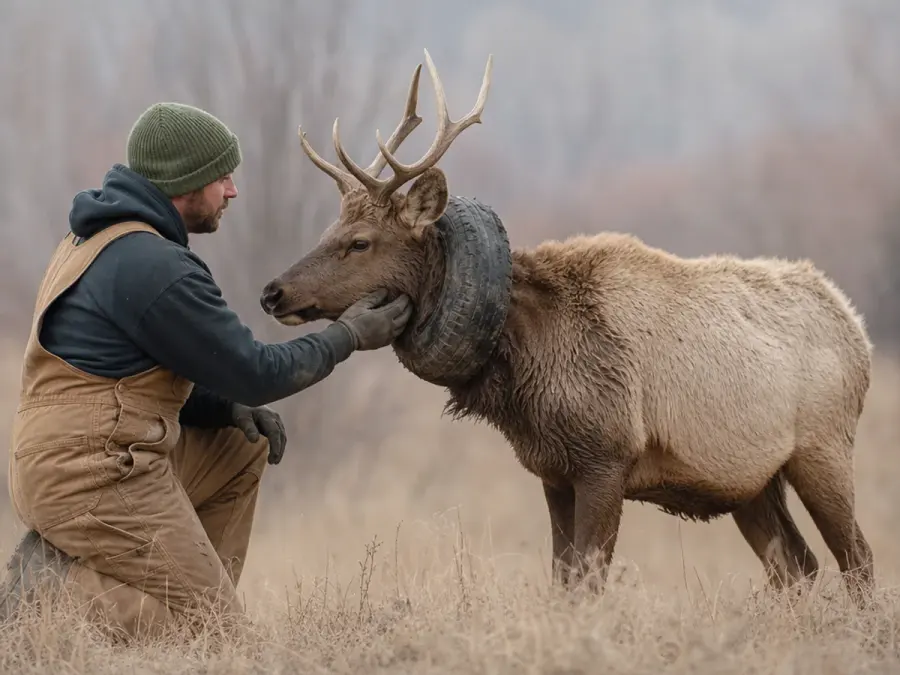
The Hard Choice — The Hard Choice
To save time and minimize stress on the animal, officers made the tough call to cut the elk's antlers.
While it seemed drastic, antlers naturally shed and regrow every year, making it a safe trade-off. This allowed them to slide the heavy tire off the elk's head quickly and safely.
Instant Relief — Instant Relief
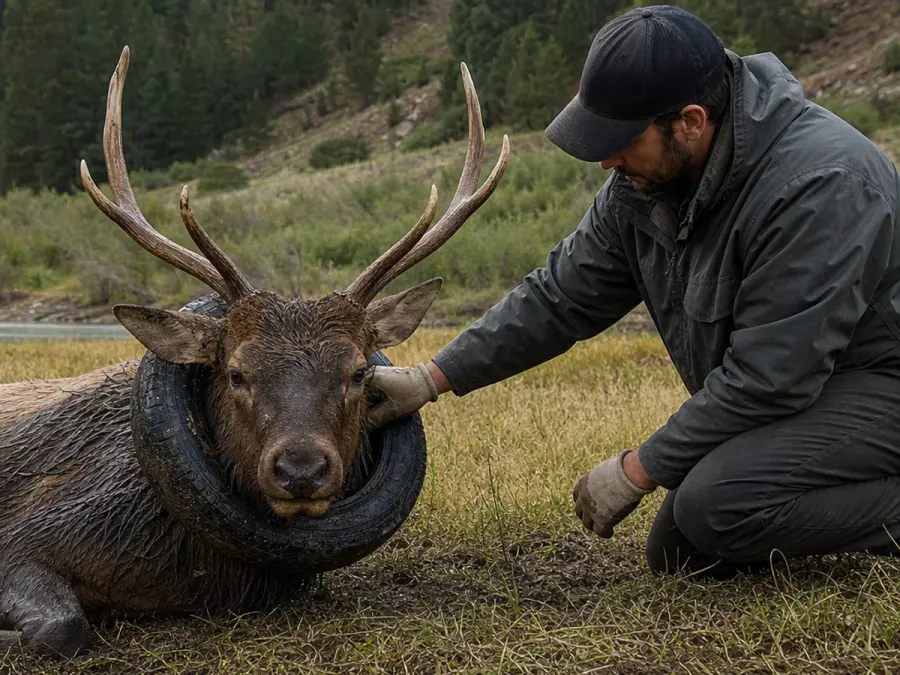
Removing the tire and the debris trapped inside immediately relieved the elk of over 35 pounds of dead weight.
The skin under the tire was surprisingly in decent shape, showing only minor hair loss and a small wound. Rescuers were relieved to see that the physical damage was minimal.
Waking Up Free — Waking Up Free
After administering a reversal agent, the team watched from a safe distance as the elk slowly woke up.
It stood up, shook its head, and realized the heavy burden around its neck was finally gone. The majestic beast quickly trotted back into the safety of the woods, lighter and freer than before.
A Triumph for Wildlife — A Triumph for Wildlife
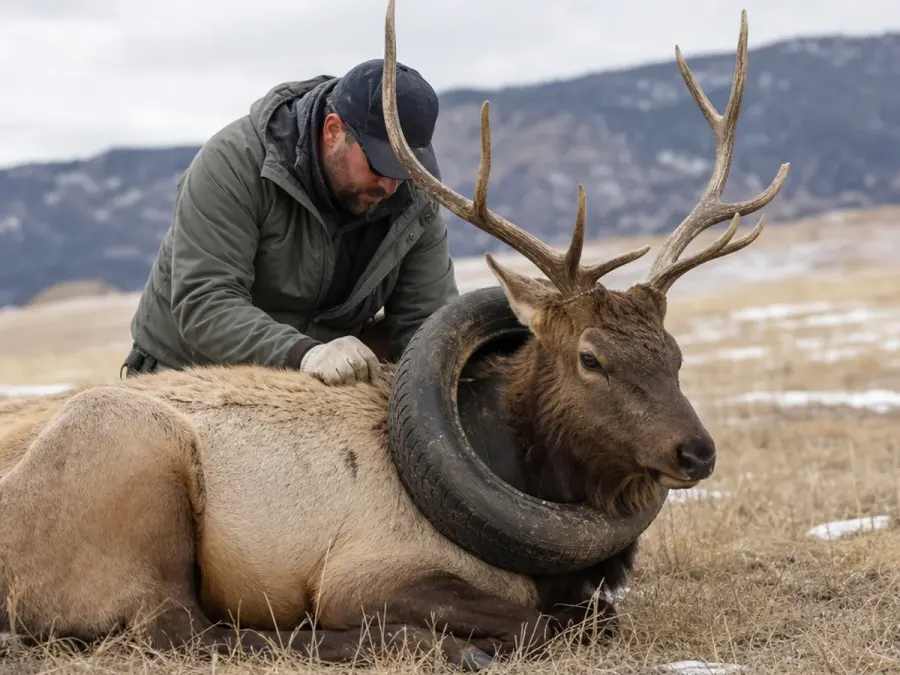
The successful rescue was celebrated by wildlife lovers across the country who had followed the elk's plight.
It served as a powerful reminder of the dedication shown by conservation officers who go to great lengths to protect wild animals. The team's quick thinking and expertise saved a life.
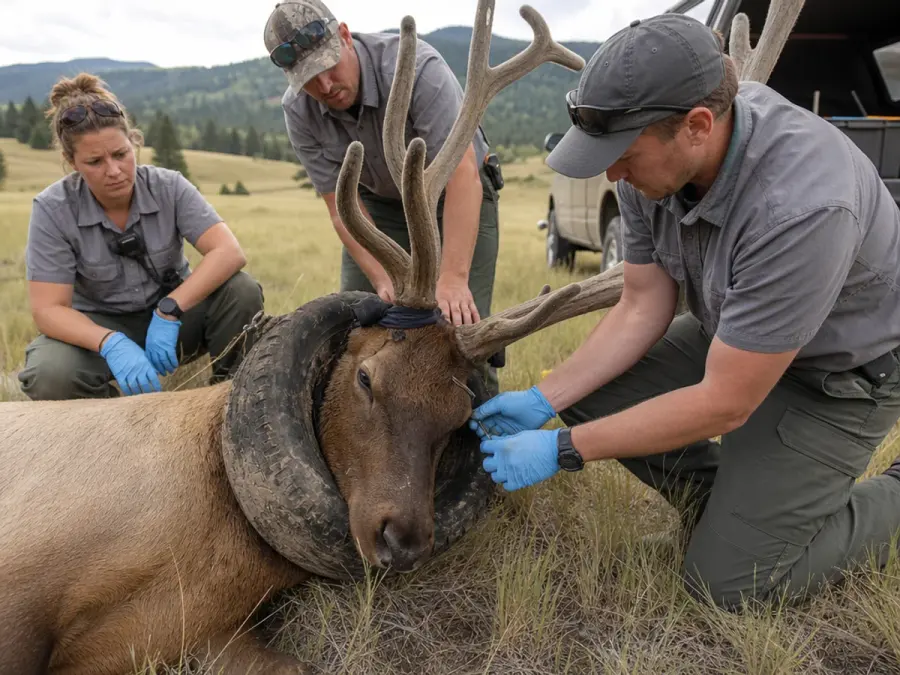
A Lesson for All — A Lesson for All
This dramatic story highlights the danger that human litter and discarded items pose to wild animals.
Simple actions like properly disposing of trash and removing backyard hazards can prevent these dangerous situations. Protecting our natural neighbors requires everyone to be mindful of what we leave behind.
Featured galleries







































































































































































































































































































































































































































































