14 Greatest Tennis Players, Using a Cross-Era and Cross-Tour Rubric
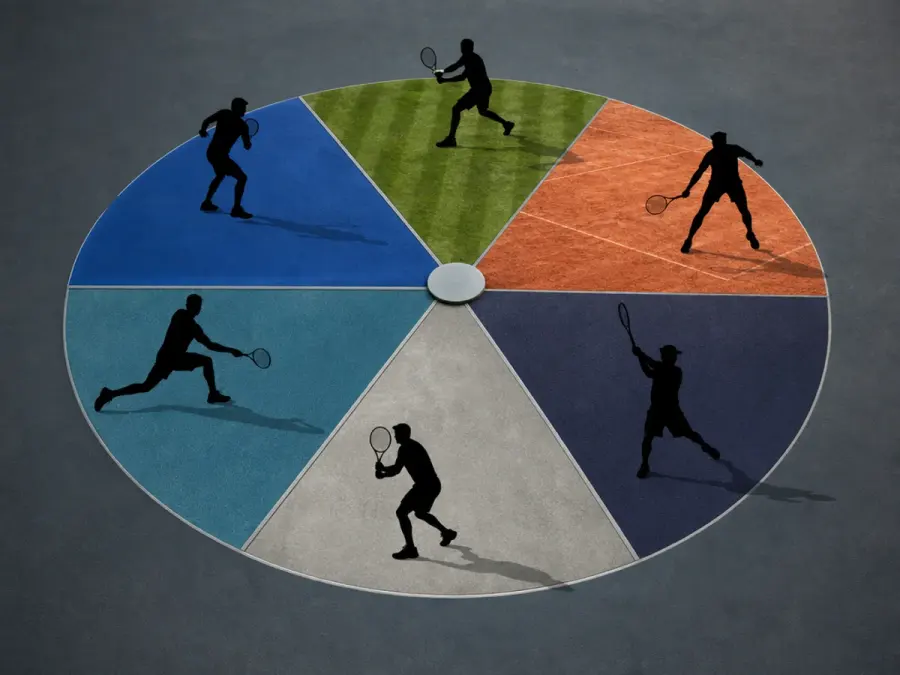
Why One Tennis Number Cannot Settle It — Why One Tennis Number Cannot Settle It
Major titles matter, but access and tournament structure changed sharply. Peak winning percentage, weeks at number one, surface range, doubles contribution, and sport-building also matter.
ATP and WTA records anchor facts; the cross-tour order is our editorial synthesis, not an official ranking.
14. Billie Jean King — 14. Billie Jean King
King's singles and doubles success would merit attention on its own, but her role in building women's professional tennis makes her influence foundational.
Fourteenth reflects a singles-heavy rubric; a list weighting institution-building or total doubles achievement more strongly would place her much higher.
13. Monica Seles — 13. Monica Seles
Seles reached a level of baseline aggression and major-winning dominance at an exceptionally young age.
A violent interruption makes normal longevity comparison unjustly simple, so our rubric emphasizes her documented peak without speculating about titles she might have won. That balance places her thirteenth.
12. Andre Agassi — 12. Andre Agassi
Agassi completed the career Grand Slam and added Olympic singles gold, making him one of the most surface-complete men's champions.
Twelfth rewards reinvention and longevity across changing conditions. Lower consistency than the players ahead prevents the broad achievement set from carrying him higher.
11. Pete Sampras — 11. Pete Sampras
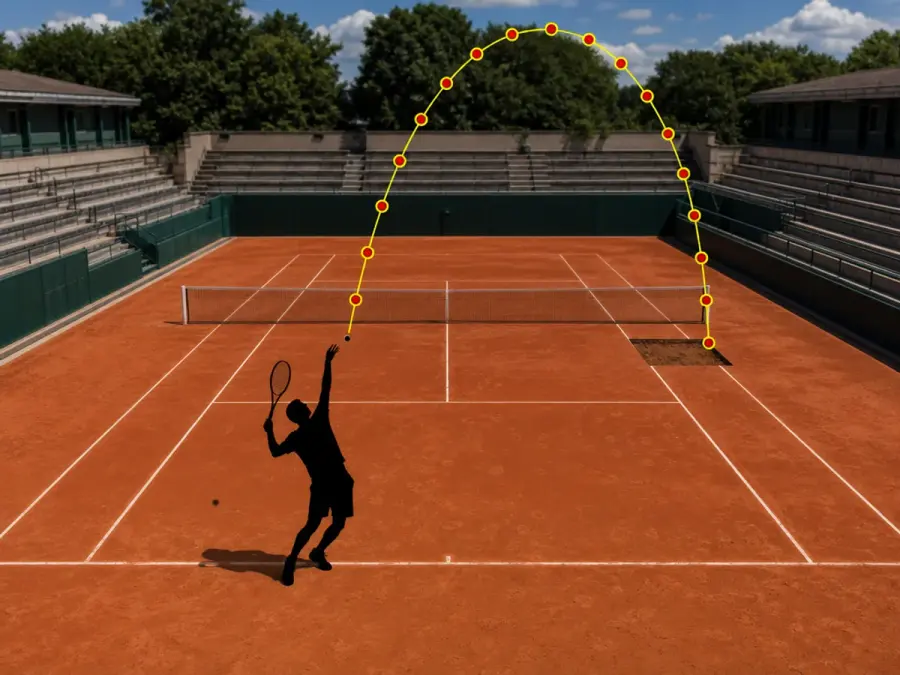
Sampras retired with fourteen major singles titles and a game optimized for fast courts and high-pressure serving.
Eleventh reflects a dominant era and championship efficiency. The absence of a Roland Garros final weakens his surface-range score relative to the more complete careers above.
10. Björn Borg — 10. Björn Borg
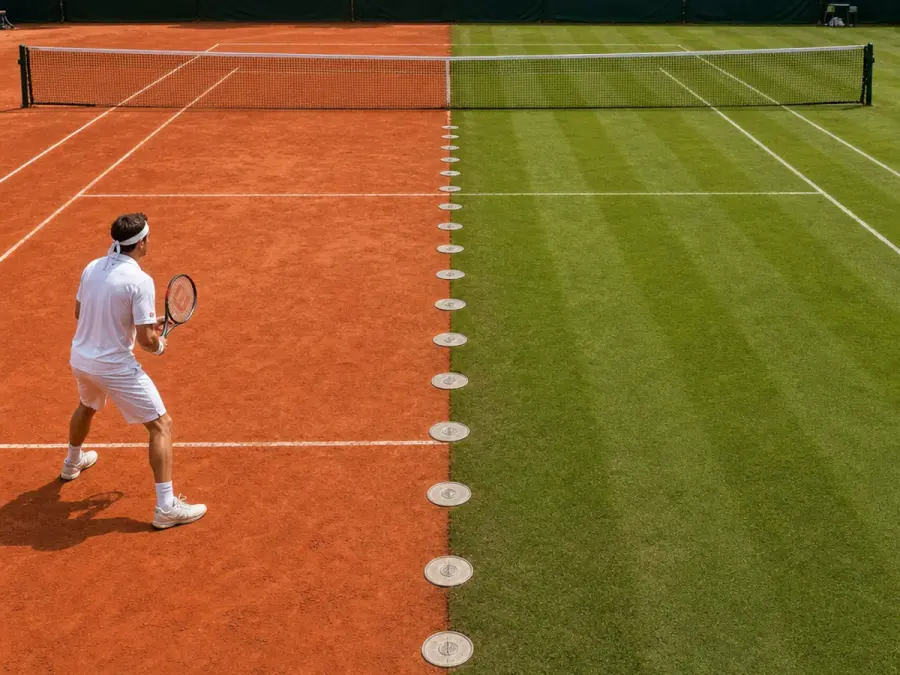
Borg's eleven majors came from extraordinary dominance at Roland Garros and Wimbledon, two surfaces demanding radically different solutions.
He ranks tenth because the peak was historic and the double difficult, while early retirement limited career breadth and left no US Open title.
9. Chris Evert — 9. Chris Evert
WTA records credit Evert with an extraordinary 90.09 percent career winning rate, eighteen singles majors, and 260 weeks at number one.
Ninth reflects consistency almost without precedent. Cross-tour positional ordering is subjective, but no all-time discussion can ignore her baseline precision.
8. Martina Navratilova — 8. Martina Navratilova
Navratilova's 167 singles titles, 177 doubles titles, eighteen singles majors, and nine Wimbledon singles crowns create a uniquely broad record.
Eighth reflects our singles emphasis; an all-discipline ranking could reasonably move her near the very top. Her training influence also changed professional preparation.
7. Rod Laver — 7. Rod Laver
Laver remains the only man to complete the calendar Grand Slam in the Open Era, doing so in 1969 after earlier years when professionals were barred from majors.
Seventh rewards peak completeness and era context. Lost opportunity makes his official major total unusually incomplete.
6. Margaret Court — 6. Margaret Court
Court's 24 major singles titles match the all-time headline record, and her doubles success expands the résumé.
Sixth reflects the need to contextualize amateur-era fields and the Australian major's historical participation patterns. This evaluates playing achievement and does not endorse later public statements.
5. Rafael Nadal — 5. Rafael Nadal
Nadal's 22 majors include an unmatched fourteen Roland Garros titles, while victories at every major and Olympic singles gold establish completeness beyond clay.
Fifth reflects the greatest single-surface dominance in the ranking, balanced against shorter sustained availability than the leaders.
4. Roger Federer — 4. Roger Federer
Federer's twenty majors, eight Wimbledon titles, longevity, and attacking fluency helped define a global era. Fourth rewards surface adaptability and influence.
Djokovic and Nadal later surpassed parts of his record, but historical greatness is not erased when a benchmark becomes a target others pass.
3. Steffi Graf — 3. Steffi Graf
Graf won 22 major singles titles and completed the 1988 Golden Slam—every major plus Olympic singles gold in one calendar year.
Third reflects that unmatched peak-season sweep, surface range, and long tenure at number one. Cross-era depth remains an unavoidable caveat.
2. Serena Williams — 2. Serena Williams
Williams' 23 major singles titles, power, serving, longevity, and championship success across different generations create the strongest modern women's résumé.
Second is not a claim of inferiority to the men's leader; it is our synthesis across tours. A peak-dominance weighting could place her first.
1. Novak Djokovic — 1. Novak Djokovic
Djokovic leads our rubric with a men's-record 24 majors, 409 Grand Slam match wins after Wimbledon 2026, titles at every major at least three times, and Olympic singles gold.
Surface completeness, longevity, and head-to-head era strength create the narrowest overall edge.
Featured galleries







































































































































































































































































































































































































































































