Jeffrey Manchester: 15 Documented Facts Behind the 'Roofman' Story

The Nickname Came From an Entry Method — The Nickname Came From an Entry Method
Reporters called Manchester the 'Roofman' because he entered a series of fast-food businesses by cutting through roofs. The nickname describes a method, not a fictional alter ego.
Published counts vary, so a responsible account says he was linked to numerous robberies rather than presenting one disputed total as settled.
The Crimes Were Not Harmless Capers — The Crimes Were Not Harmless Capers
The unusual access point often dominates retellings, but employees were subjected to armed robbery and confinement.
Manchester's North Carolina case included robbery and kidnapping convictions. Any account that focuses only on ingenuity misses the coercion experienced by people doing ordinary service work.

He Was Arrested in North Carolina in 2000 — He Was Arrested in North Carolina in 2000
Contemporaneous and later reporting places Manchester's arrest in North Carolina in May 2000 after robberies in the Gastonia area.
The arrest ended the first widely reported phase of the case. It is safer to anchor the timeline to documented North Carolina proceedings than to colorful nationwide folklore.

A Long Prison Sentence Followed — A Long Prison Sentence Followed
Reports describe a sentence extending to as much as 45 years for the 2000 case, including armed robbery and kidnapping convictions.
Sentence summaries can combine minimums, maximums and later terms, so readers should use the state offender record—not a movie tagline—for the current controlling dates.

The 2004 Escape Used a Prison Vehicle — The 2004 Escape Used a Prison Vehicle
Manchester escaped North Carolina custody in June 2004. Contemporary accounts say he concealed himself beneath a vehicle leaving a prison work area.
That fact helps explain public fascination, but operational details should not be expanded into a how-to. The institutional failure and subsequent search are the relevant public-record points.

Charlotte Became the Center of the Manhunt — Charlotte Became the Center of the Manhunt
After the escape, Manchester surfaced in Charlotte. Investigators connected later break-ins to the fugitive through physical evidence, including a reported fingerprint.
This is a reminder that dramatic double-life stories were reconstructed after law enforcement already had a convicted person's identity to compare.

He Hid in and Around a Toy Store — He Hid in and Around a Toy Store
The best-known episode is supported by police reporting: Manchester occupied concealed space in or around a Charlotte toy-store complex for months.
Accounts describe a makeshift living area and movement inside the store after hours. The former retailer's brand is incidental; the central fact is prolonged unlawful concealment.

The Hideout Was More Than a Night or Two — The Hideout Was More Than a Night or Two
Later accounts generally describe the concealment as lasting several months, often summarized as about six.
Exact start dates can differ according to whether reporters count time in the store, nearby vacant space or the entire Charlotte period. 'Months-long' is the defensible fact; false precision adds little.

He Also Appeared in Ordinary Community Settings — He Also Appeared in Ordinary Community Settings
Public reporting says Manchester used an assumed identity and attended a local church while a fugitive. That contrast helped turn the story into folklore.
It should not be used to expose uninvolved congregants or infer what private people knew; published records indicate people around him were deceived.

A Holiday-Season Store Robbery Ended the Concealment — A Holiday-Season Store Robbery Ended the Concealment
Investigators tied Manchester to a robbery at the Charlotte toy store during the 2004 holiday season.
The crime shifted the case from a strange hideout story to another armed workplace event. Avoid reenactment imagery: employees and shoppers are not props in the fugitive narrative.

Police Recaptured Him in January 2005 — Police Recaptured Him in January 2005
Charlotte police arrested Manchester in January 2005, ending the escape period. Reports from the time described evidence recovered from the concealed living space and the later store crime.
The arrest is a fixed chronological point; dramatized pursuit scenes should not substitute for the public record.

New Guilty Pleas Added More Consequences — New Guilty Pleas Added More Consequences
Later North Carolina proceedings covered escape-period offenses including robbery, breaking and entering and arson. Reports say Manchester pleaded guilty to a group of new charges.
Because different counties and sentences can be summarized differently, the state record should control any exact release projection.
He Remained in North Carolina Custody in 2026 — He Remained in North Carolina Custody in 2026
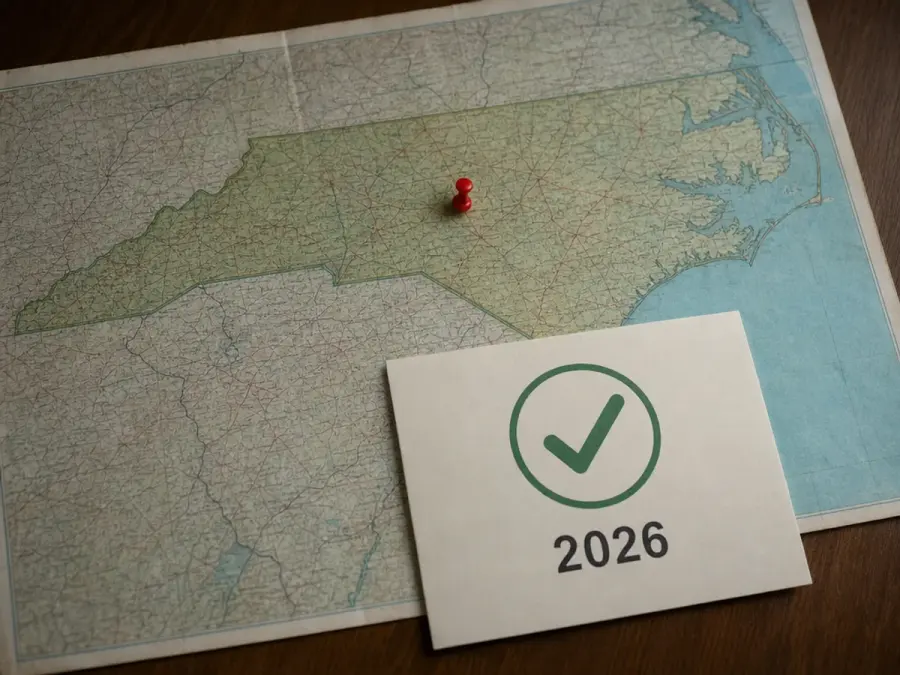
As of this review, public reporting and the state search placed Manchester at Central Prison in Raleigh. Custody location and projected release dates can change with transfers, credits or legal action.
Readers should search the exact name in the official state tool for a current status rather than reuse this sentence indefinitely.
Roofman Turned the Case Into a 2025 Film — Roofman Turned the Case Into a 2025 Film
Derek Cianfrance directed and co-wrote Roofman, with Channing Tatum playing Manchester. The feature premiered and opened theatrically in 2025.
Production interviews describe extensive research, yet filmmakers also acknowledged narrative shaping. Casting and consultation do not convert scenes into documentary evidence.

The Responsible Takeaway Is Record Before Legend — The Responsible Takeaway Is Record Before Legend
The case is unusual enough without embellishment: documented robberies, a conviction, a prison escape, months of concealment, recapture and further convictions.
The durable editorial rule is to name the harm, distinguish report from judgment, protect uninvolved people and clearly label the film as an interpretation.
Featured galleries







































































































































































































































































































































































































































































