15 Original Tattoo Gallery Ideas You Have to See
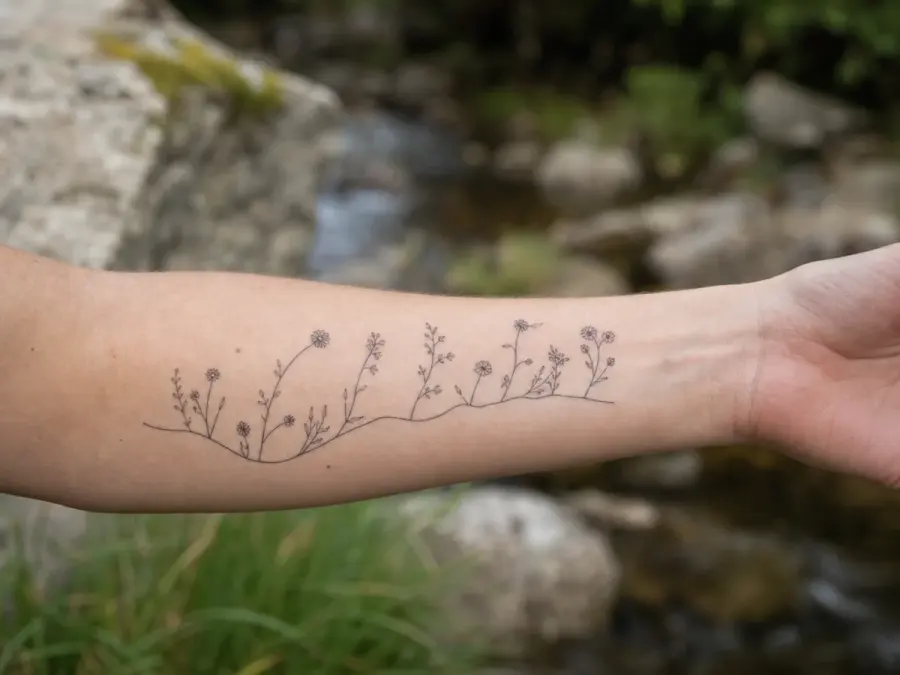
One-Line Meadow — One-Line Meadow
A continuous line can suggest a small meadow with only a few bends, stems, and seed heads. The appeal comes from restraint: the drawing leaves more skin untouched than filled.
Placed along a forearm, the horizontal rhythm feels calm and gives the invented botanical forms enough room to remain distinct.
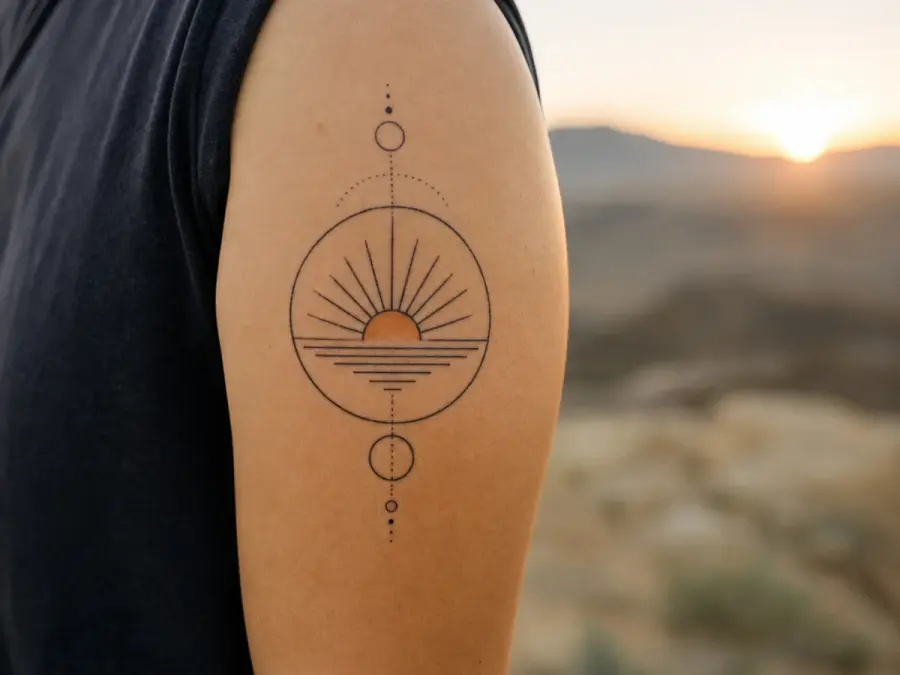
Geometric Sunrise — Geometric Sunrise
This concept combines a half circle, three narrow rays, and one low horizon line. The simple geometry creates an optimistic image without imitating a known logo or emblem.
A compact upper-arm placement gives the design a broad, stable surface and allows each line to stay crisp and easy to read.
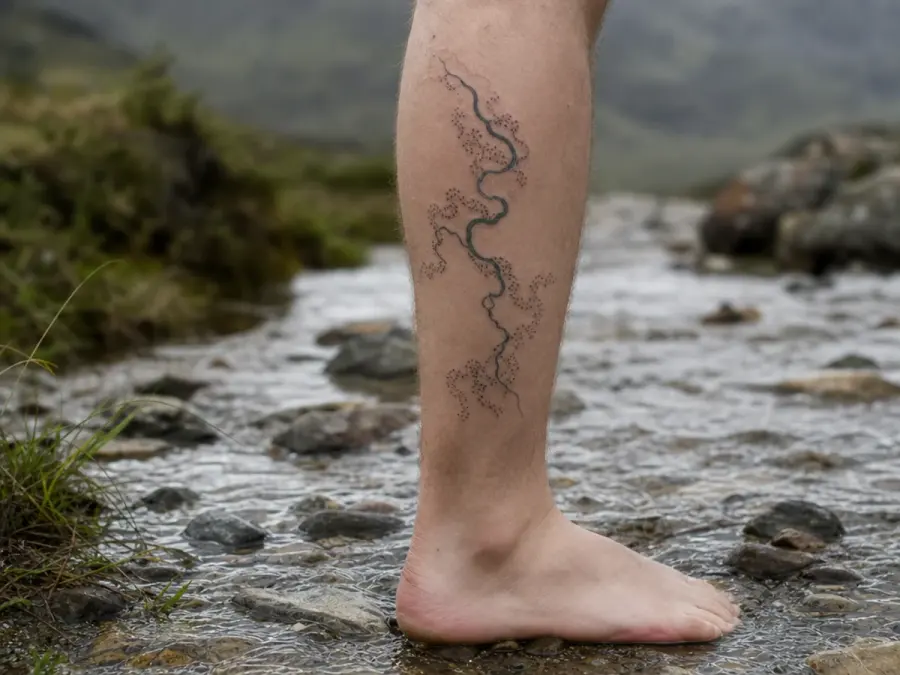
Abstract River Bend — Abstract River Bend
Two uneven parallel curves can evoke a river viewed from above without depicting a real location. Small dot clusters along one edge add texture and suggest a changing shoreline.
The vertical flow suits the calf or forearm, where the design can follow the limb rather than sitting like a rigid sticker.
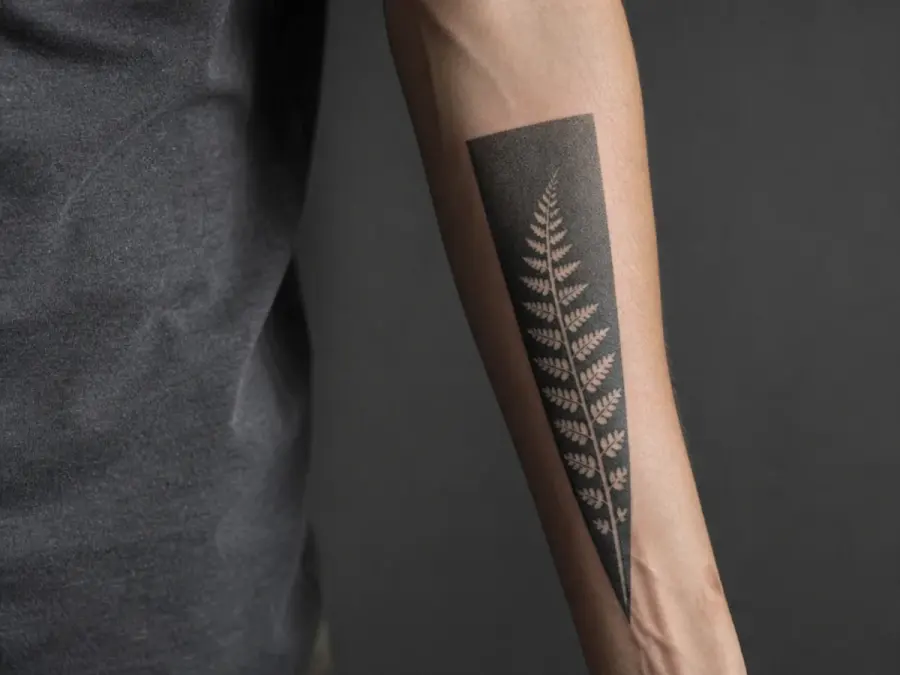
Negative-Space Fern — Negative-Space Fern
A dark tapered panel becomes lighter when a fern silhouette is left unfilled through its center. The contrast makes the plant shape visible without relying on detailed botanical copying.
A narrow panel keeps the concept elegant, and the surrounding skin acts as part of the composition rather than empty background.
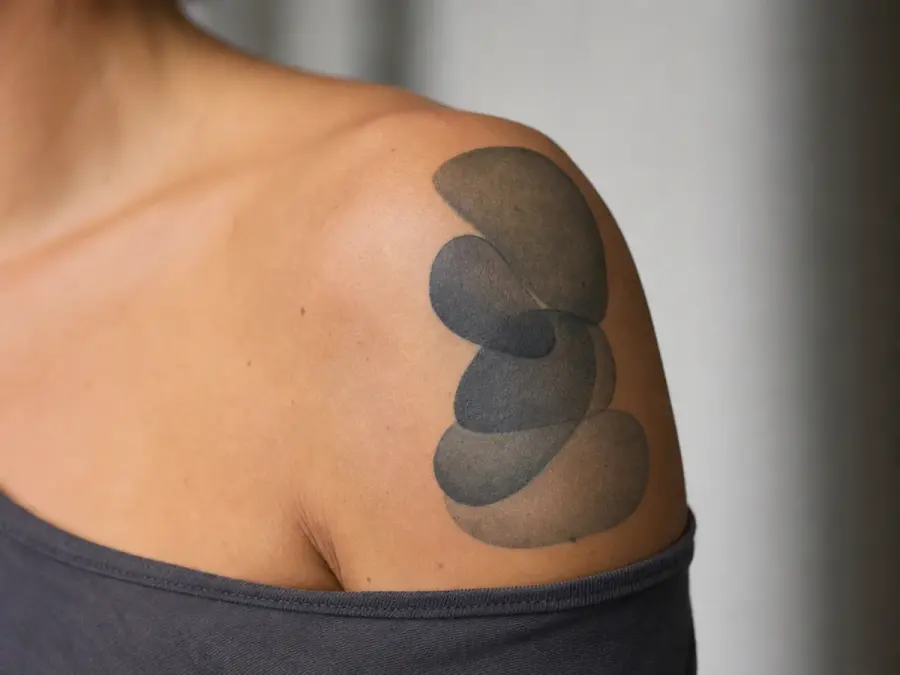
Layered Pebble Shapes — Layered Pebble Shapes
Overlapping rounded shapes in several gray values can create a quiet, modern arrangement. Each form should have a different contour, like invented pebbles rather than perfect circles.
The layered transparency gives depth while the compact cluster works well on a shoulder blade, thigh, or another broad area.
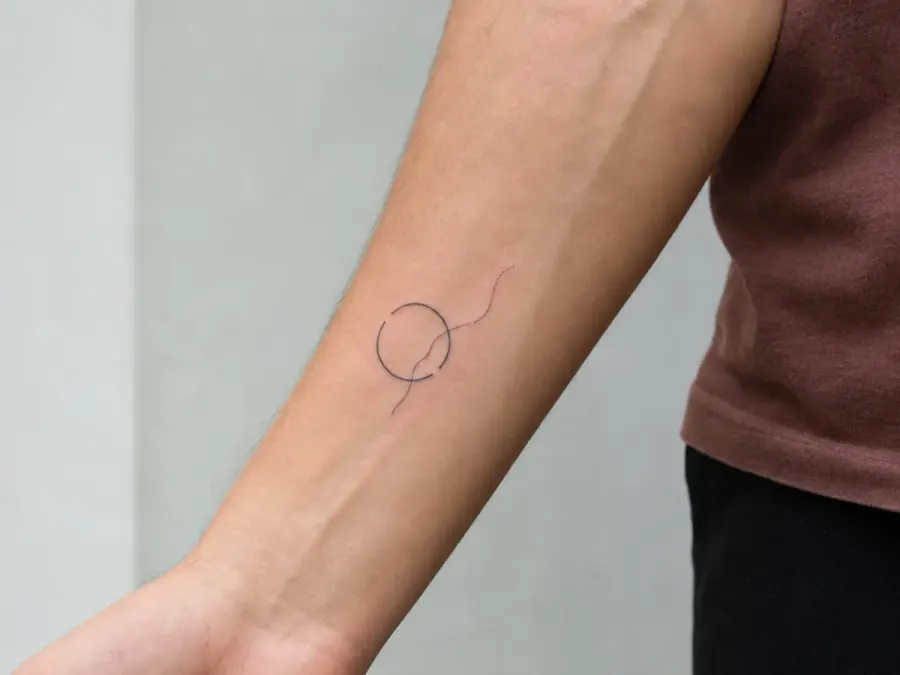
Broken Circle and Thread — Broken Circle and Thread
A nearly complete circle gains energy when one section opens and releases a thin wandering line.
The contrast between the stable ring and the loose thread creates a clear visual story without words. Keeping both elements fine and balanced lets the design remain light even at a medium scale.
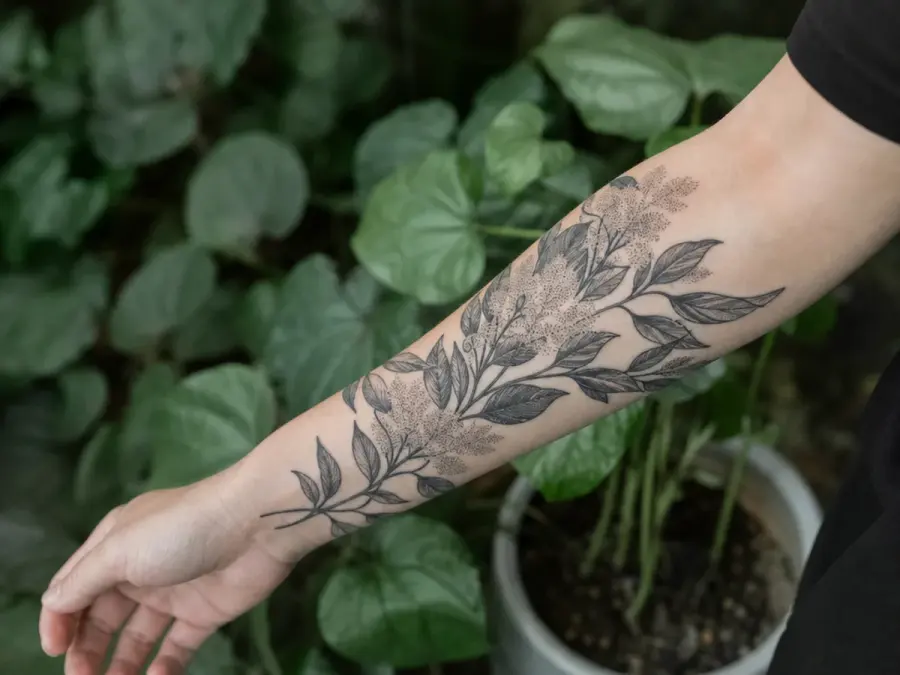
Night Garden Dotwork — Night Garden Dotwork
A small night garden can be built from dark leaves, pale dotwork blossoms, and an open crescent-shaped gap. The mix of solid and stippled areas provides depth without requiring many colors.
An elongated composition suits the outer forearm and makes the plants appear to grow naturally along the limb.
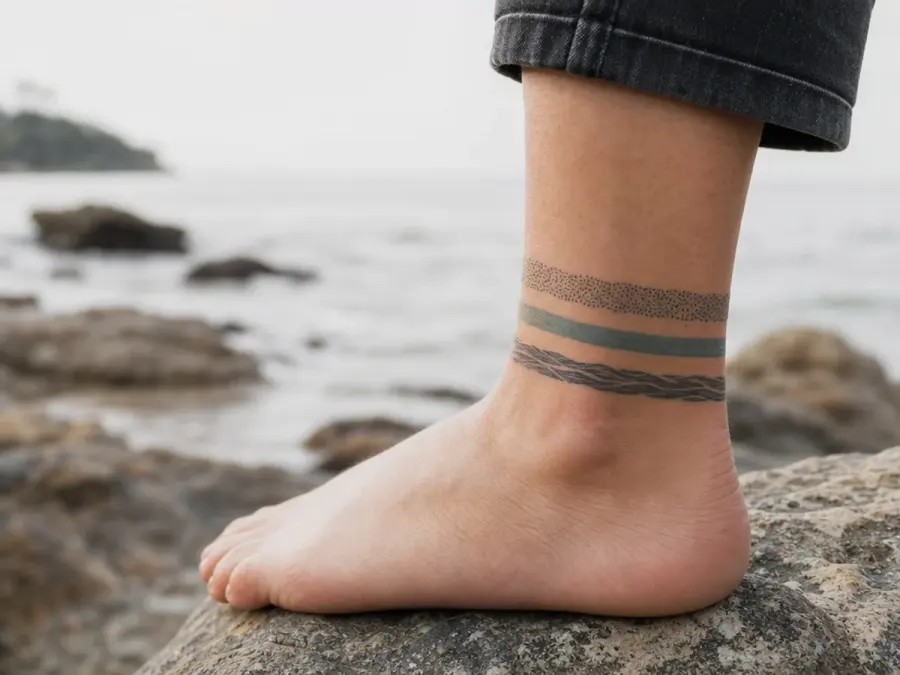
Minimal Coastal Layers — Minimal Coastal Layers
Three horizontal bands can suggest sky, water, and shore through texture rather than literal scenery. One smooth line, one lightly broken line, and one stippled band are enough to establish the layers.
The design works best at a modest width where the changing marks remain clear from a normal distance.
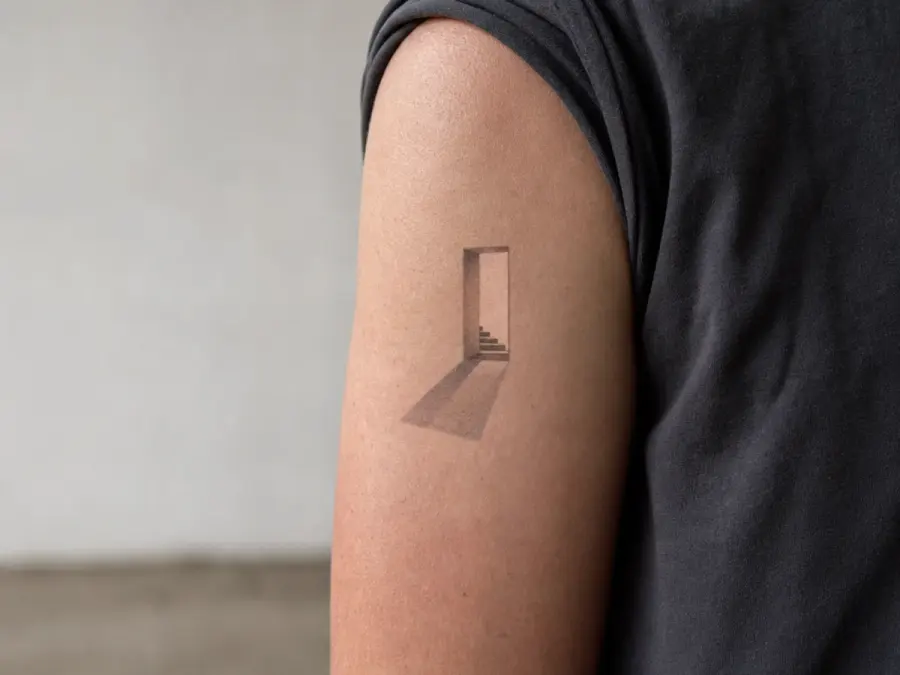
Architectural Shadow — Architectural Shadow
An invented doorway and its long diagonal shadow create a tiny architectural scene using only straight lines and one filled shape. The perspective gives the compact design unusual depth.
Because it is not based on a real building, the image remains personalizable while avoiding the look of a copied travel photograph.
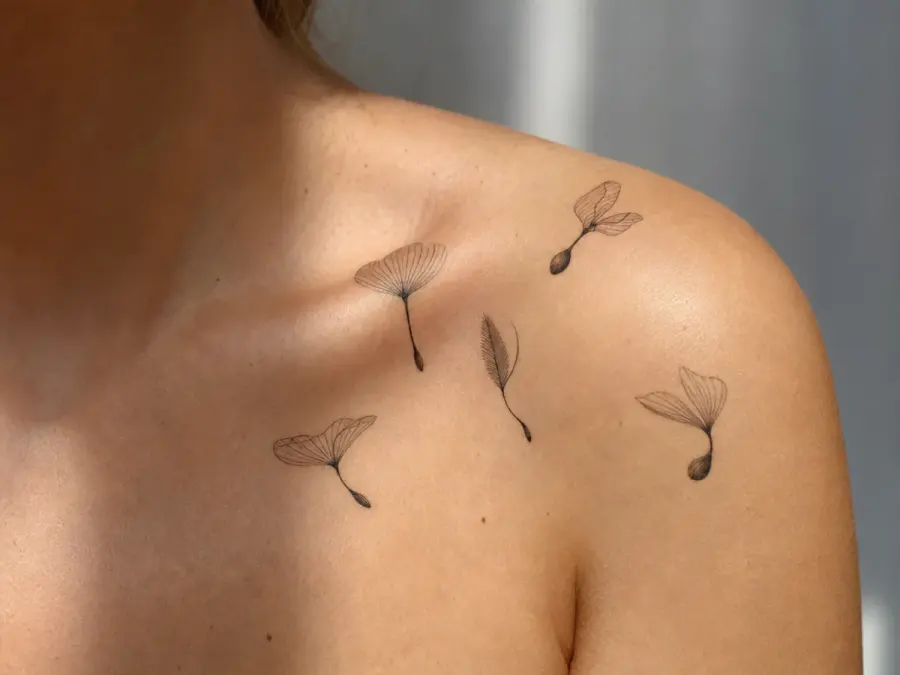
Floating Seed Forms — Floating Seed Forms
Five tiny seed-like forms can drift upward in a loose arc, each drawn with a different curve. The varied spacing makes the group feel airy and avoids the rigidity of a repeated stamp.
A placement near the collarbone or shoulder can follow the body's natural slope while preserving generous negative space.
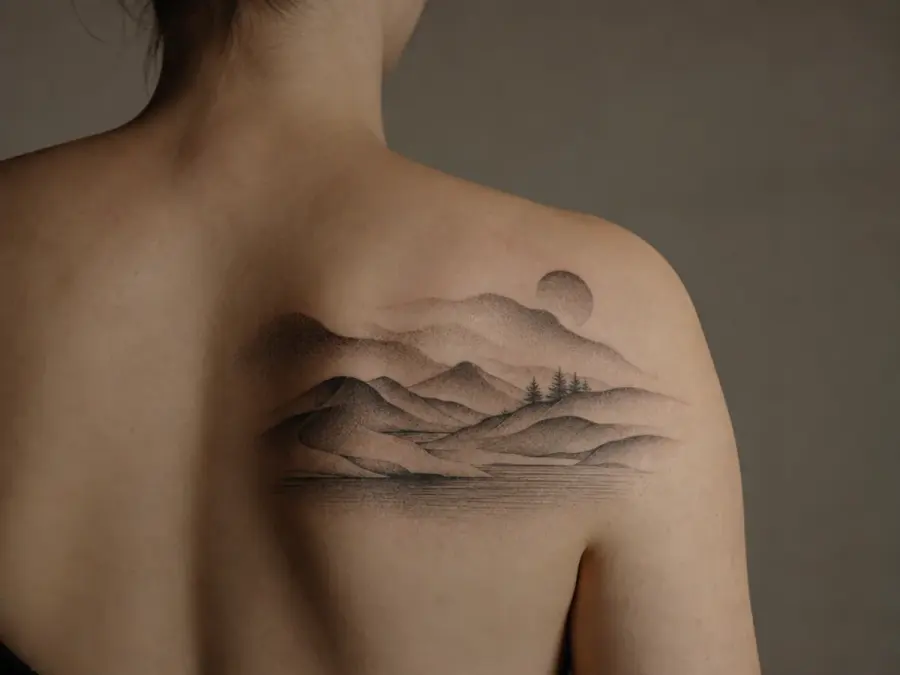
Soft Blackwork Landscape — Soft Blackwork Landscape
A low blackwork landscape can use an irregular dark field beneath a pale horizon and a single abstract tree shape.
Soft edges keep the concept from feeling like a hard badge. The broad, shallow format suits a shoulder blade or thigh, where the horizon has space to extend naturally.
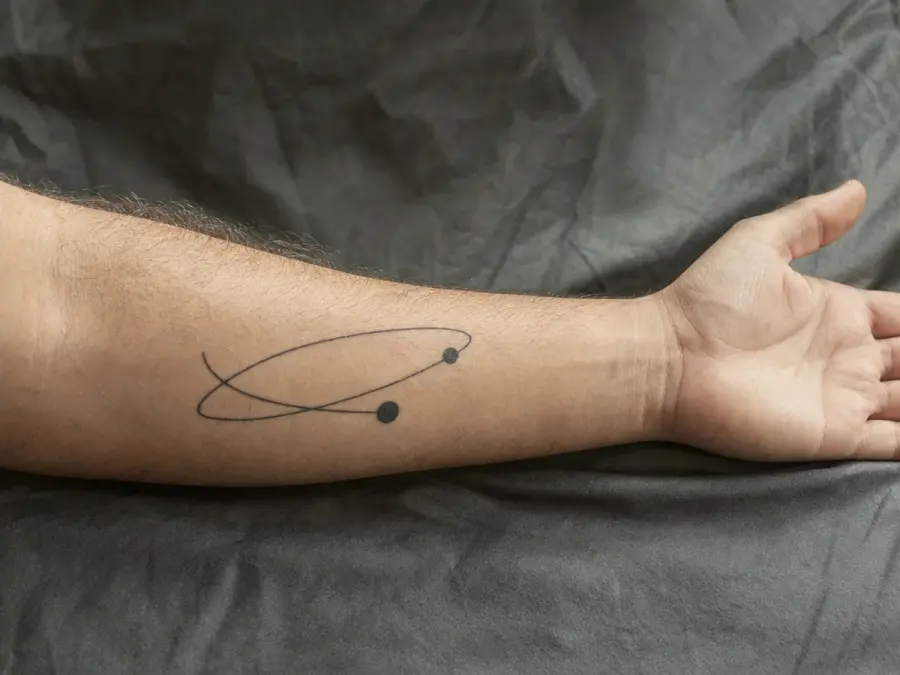
Paired Orbit Lines — Paired Orbit Lines
Two thin elliptical paths can cross around separate dark dots, creating a balanced scientific mood without reproducing a real diagram.
Slightly offset centers keep the arrangement dynamic. The design is strongest when kept open and spacious, allowing the skin between the paths to define the movement as much as the ink.
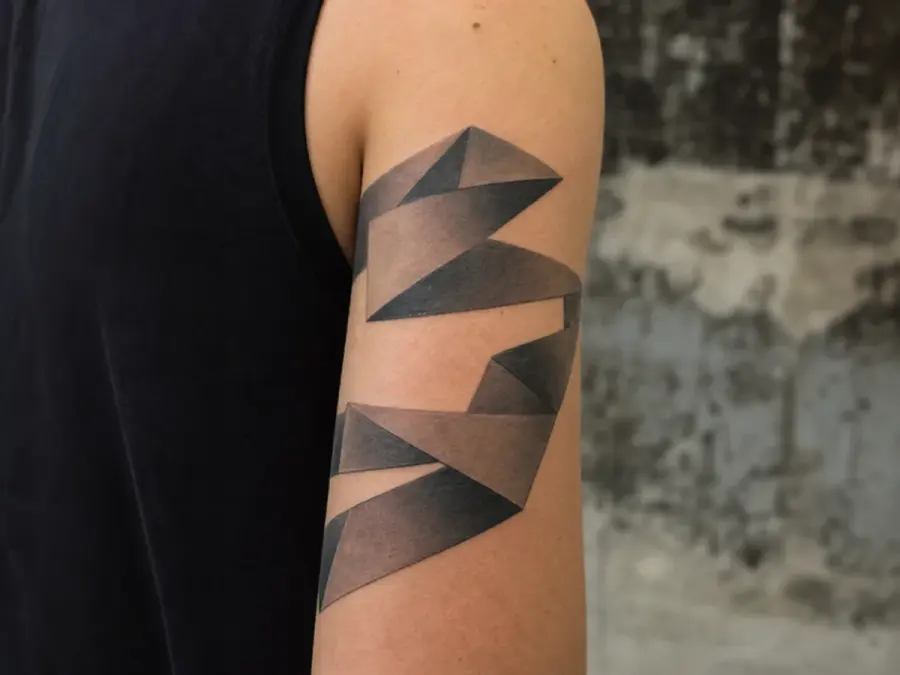
Folded Ribbon Geometry — Folded Ribbon Geometry
A ribbon made from alternating dark and light polygons can appear to fold without using shading gradients. The angular path adds movement and suits a vertical placement on the upper arm or calf.
Limiting the design to three or four turns keeps the illusion readable and prevents unnecessary visual noise.
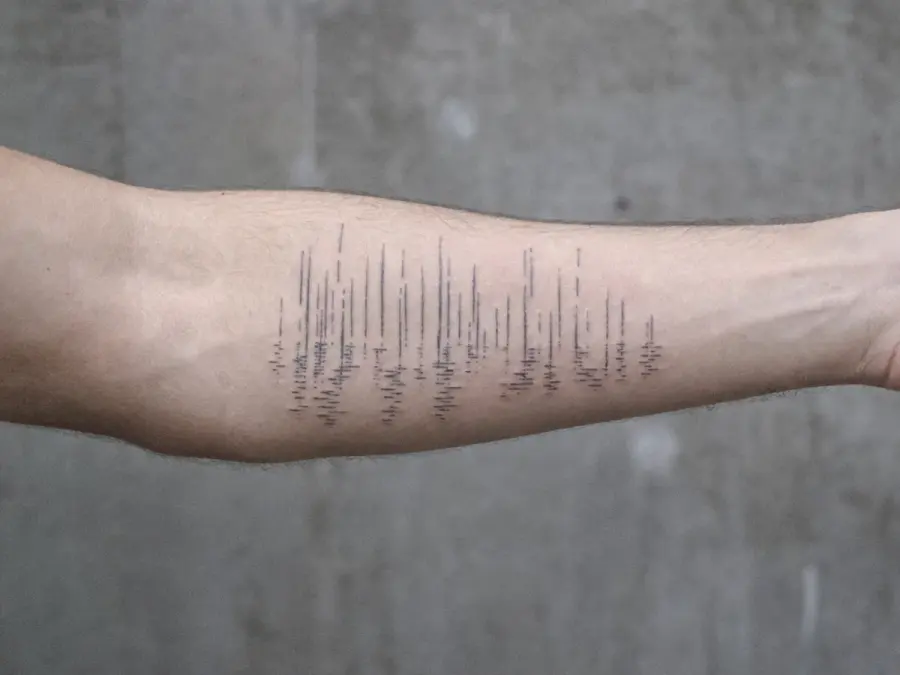
Rain and Reflection — Rain and Reflection
A group of short vertical marks above a faint mirrored set can suggest rain meeting a reflective surface. The idea stays abstract by avoiding umbrellas, buildings, or figures.
A narrow rectangular boundary holds the marks together, while subtle differences in length keep the texture from looking mechanically repeated.
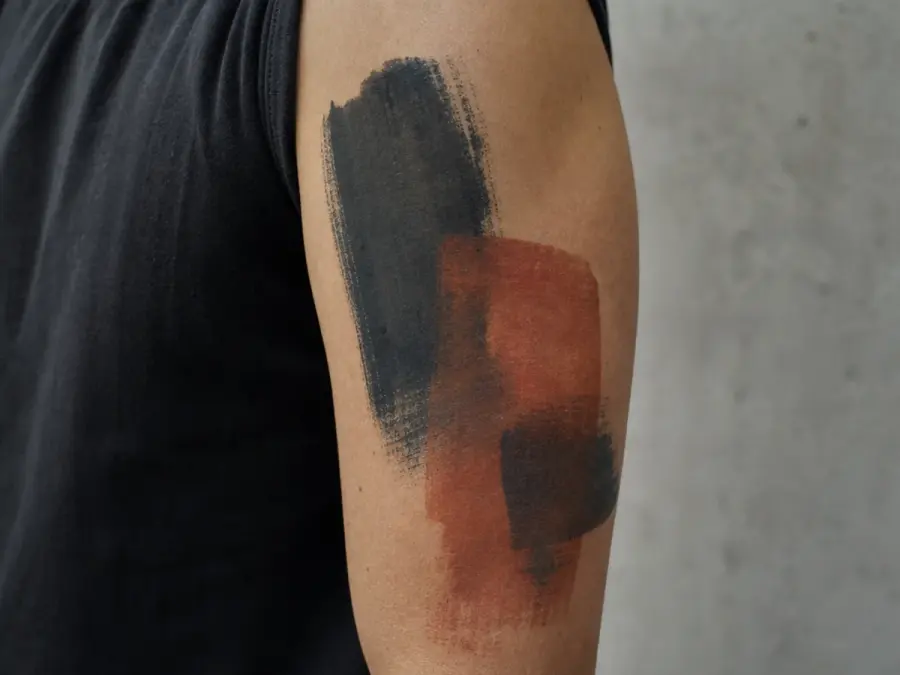
Color-Field Brush Pair — Color-Field Brush Pair
Two overlapping brush-like fields create the gallery's boldest concept. One muted rust shape and one charcoal shape meet without forming a recognizable symbol.
Uneven edges preserve an organic quality, while a small gap of untouched skin between sections keeps the colors distinct and prevents the composition from becoming a single heavy block.
Featured galleries







































































































































































































































































































































































































































































