The Secret of the Spanish Christ: What Restorers Found Inside a 240-Year-Old Statue
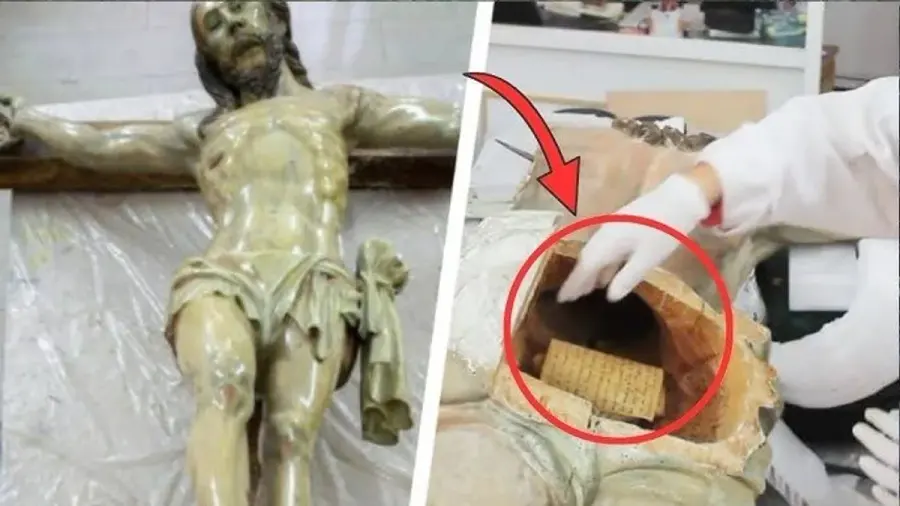
A Silent Guardian — A Silent Guardian
For over two centuries, the stunning wooden statue of Jesus Christ watched over the church of Santa Águeda in Sotillo de la Ribera, Spain.
Known as the Cristo del Miserere, the sculpture was deeply revered by locals who had no idea of the secret it held.
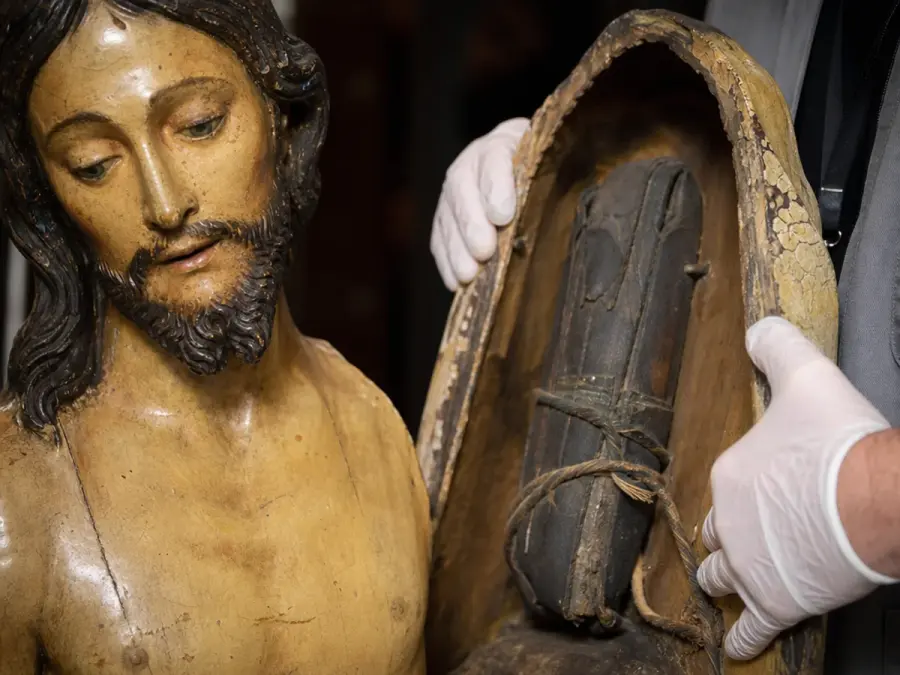
Time Takes Its Toll — Time Takes Its Toll
As the decades passed, the wooden masterpiece began to show signs of severe wear and tear.
Dust, temperature shifts, and wood-boring insects threatened to destroy the delicate historic artwork, forcing church officials to seek professional restoration.
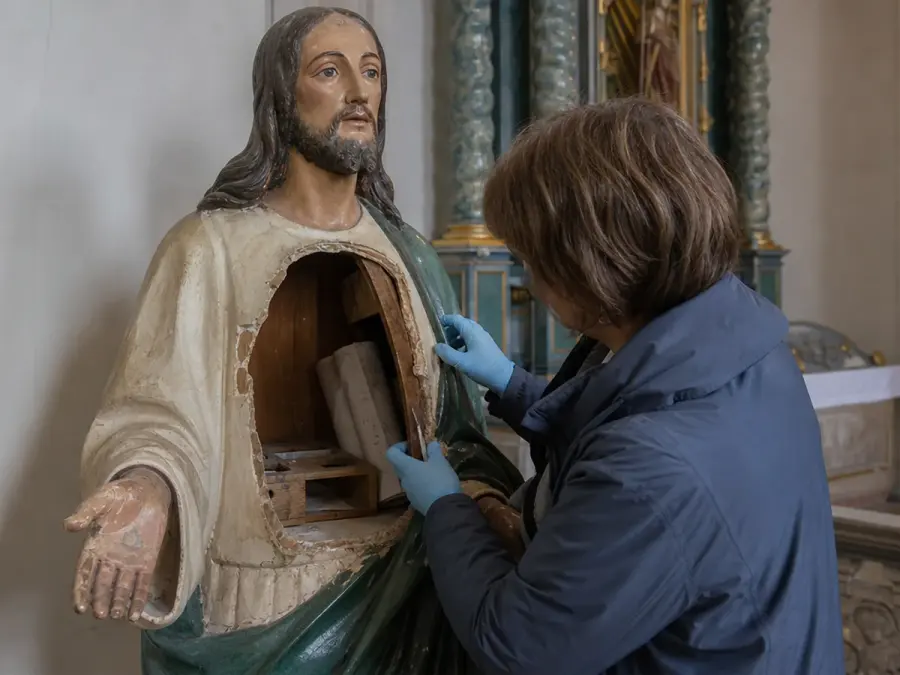
The Restoration Experts — The Restoration Experts
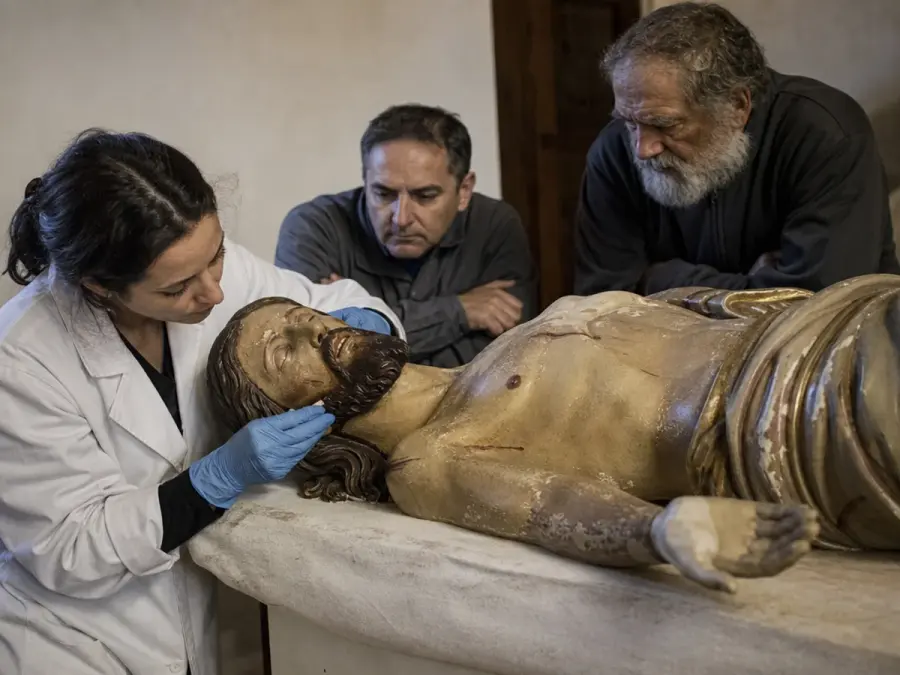
The church commissioned the restoration company Da Vinci Restauro to handle the delicate project.
Lead restorer Gemma Ramírez stepped up to guide the process, knowing that any mistake could permanently damage the sacred artifact.
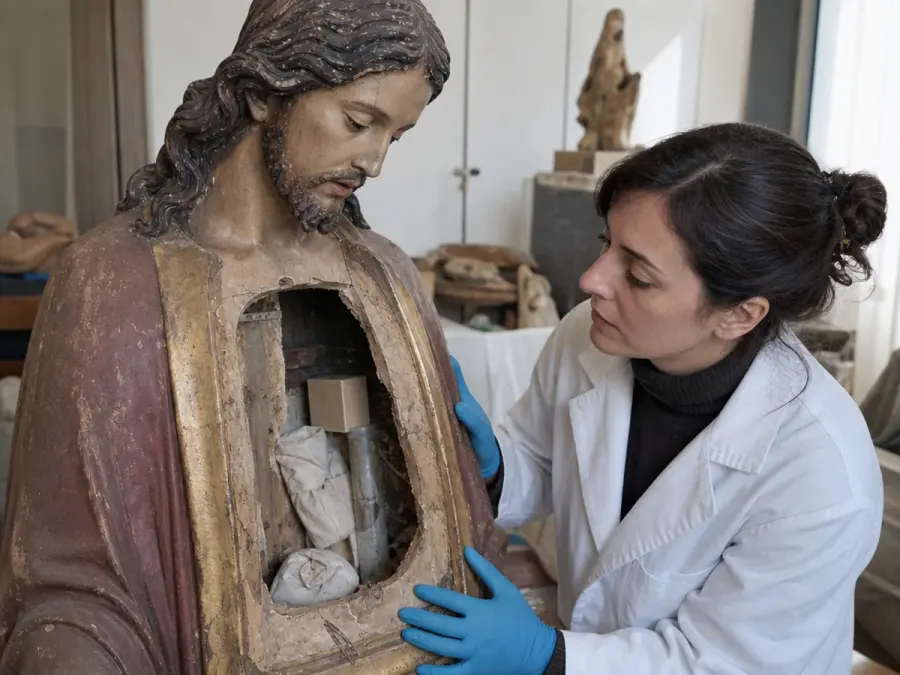
Handle With Care — Handle With Care
Moving a centuries-old wooden sculpture requires immense caution and specialized transport.
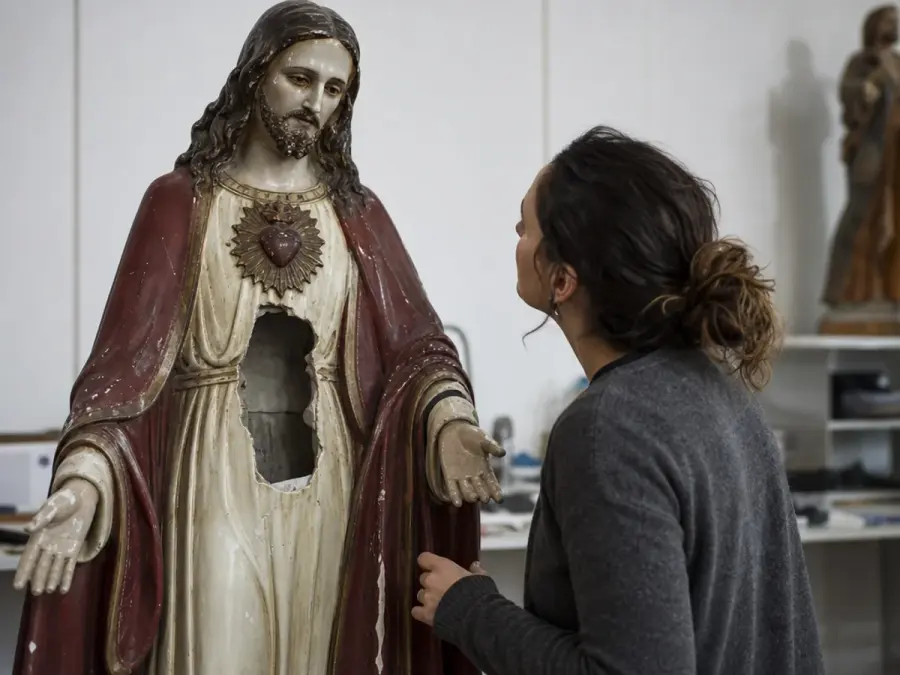
The team carefully wrapped the figure to prevent further cracking before moving it to their modern workshop for analysis.
A Curious Hollow — A Curious Hollow
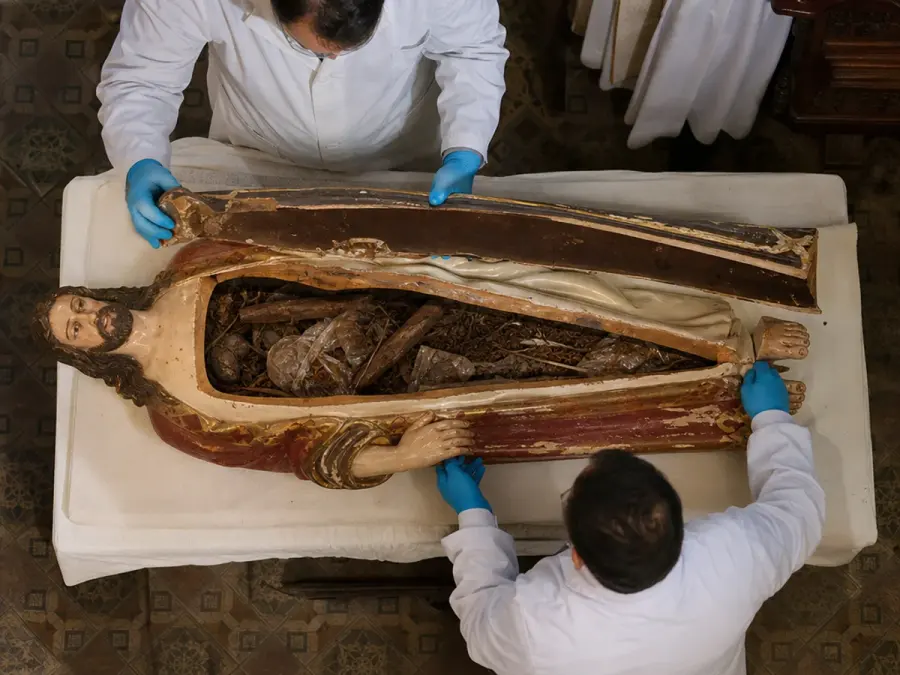
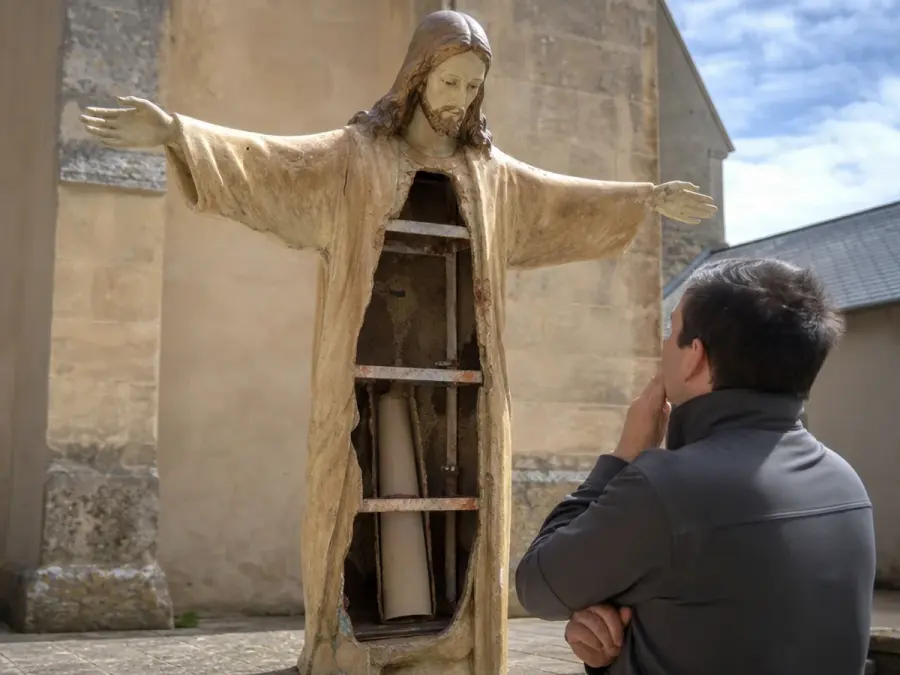
During the initial assessment, the restorers noticed that the statue was hollow, which was common for large carvings of that era to prevent cracking.
However, further examination of the statue's back revealed a loose piece of wood that seemed deliberately placed.
The Hidden Joint — The Hidden Joint
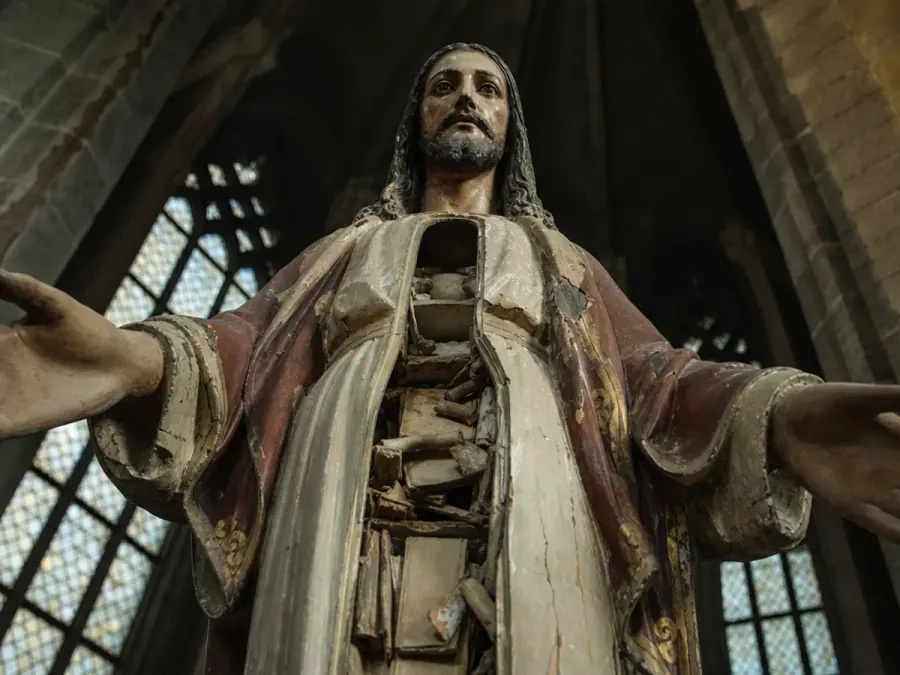
Gemma and her team noticed a seam around the gluteus area of the statue that looked like a removable cover.
Despite warnings to focus strictly on external cleaning, curiosity and professional duty urged them to investigate this structural anomaly.
Opening the Compartment — Opening the Compartment
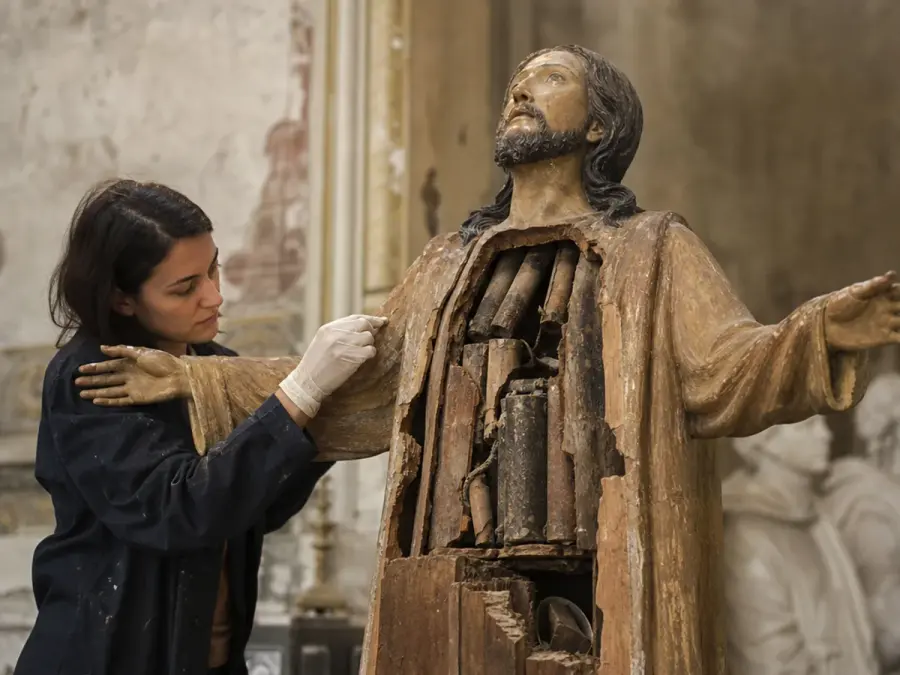
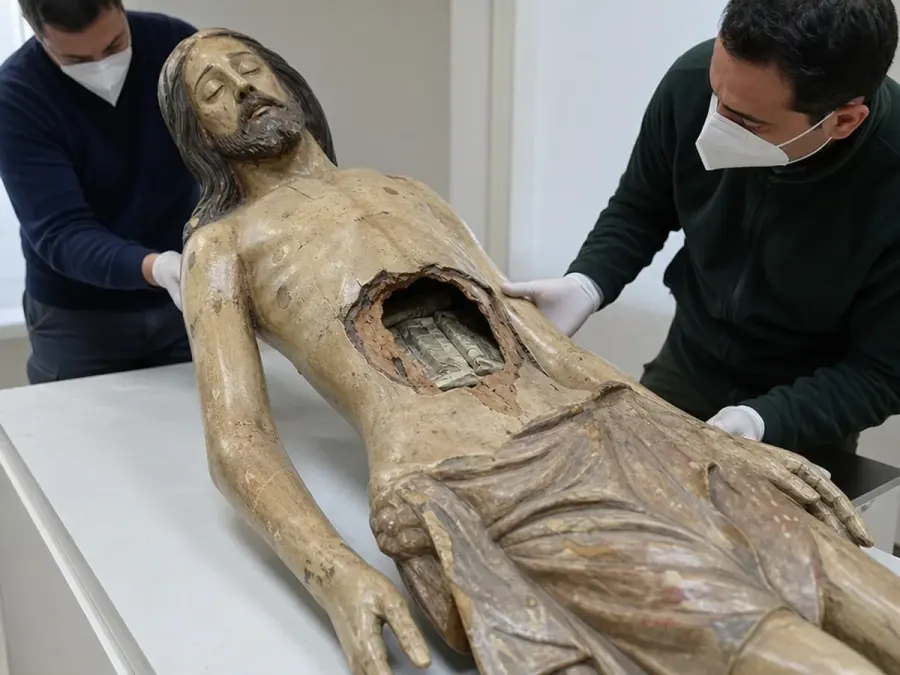
With steady hands, Gemma gently removed the wooden piece, revealing a dark, hollow chamber inside.
Tucked neatly within this unexpected compartment was a rolled-up bundle of yellowed paper, preserved perfectly away from light and moisture.
A Message From 1777 — A Message From 1777
The team carefully unrolled the document, revealing beautiful handwritten calligraphy that had remained unseen for over 240 years.
It was immediately clear that this was not a random scrap of paper, but a deliberate message sent through time.
The Chaplain's Voice — The Chaplain's Voice
The document was signed by Joaquín Mínguez, a chaplain of the Cathedral of Burgo de Osma, and dated to 1777.
Mínguez had purposefully placed the letter inside the sculpture during its creation to act as a time capsule.
A Snapshot of History — A Snapshot of History
Instead of writing a dry theological text, the chaplain filled the pages with details of daily 18th-century Spanish life.
He described local harvests, typical diseases like malaria, popular children's games, and even named the most famous bullfighters of his era.
Shocking the Community — Shocking the Community
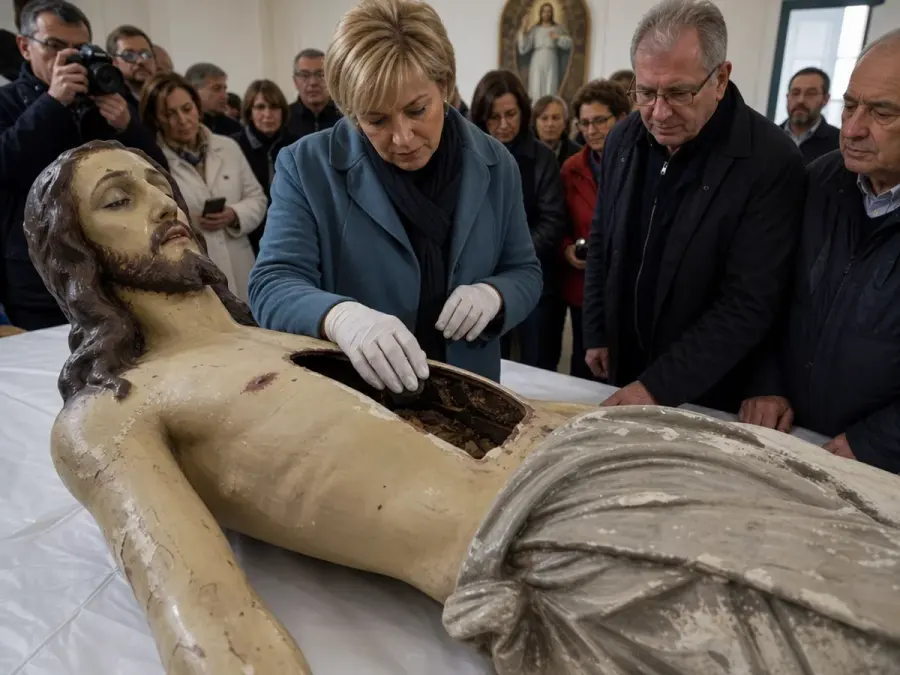
When the news of the discovery reached the church and the wider public, historians and locals were absolutely thrilled.
The find provided an incredibly rare, firsthand account of common civilian life from a period often dominated by royal histories.
Honoring the Past — Honoring the Past
After the restoration was complete, a copy of Joaquín's fascinating letter was placed back inside the statue to keep his tradition alive.
The original document was sent to local archives for preservation, ensuring the chaplain's words will never be forgotten.
Featured galleries







































































































































































































































































































































































































































































